

Lauren Bacall was one of the leading actresses of Hollywood’s Golden Age, standing shoulder to shoulder with Marilyn Monroe and Rita Hayworth. In this article on newyorkski.info we dive into her captivating story—from a Harper’s Bazaar cover to her iconic romance with Humphrey Bogart, her Broadway triumphs, and her enduring status as a style and feminist icon.
The Cover That Led to Hollywood
Born Betty Joan Perske on September 16, 1924, in New York City to Jewish immigrants from Poland and Romania, her life was marked by early hardship. Her alcoholic father abandoned the family when she was five six, leaving her to be raised by her mother and extended family. Eventually, Betty and her mother took her grandmother’s maiden name, Bacal (adding a second “l” to make it easier to pronounce). Despite growing up in poverty, the young girl was obsessed with the theater. She worked as an usherette just to catch a glimpse of the era’s greatest stage actors.
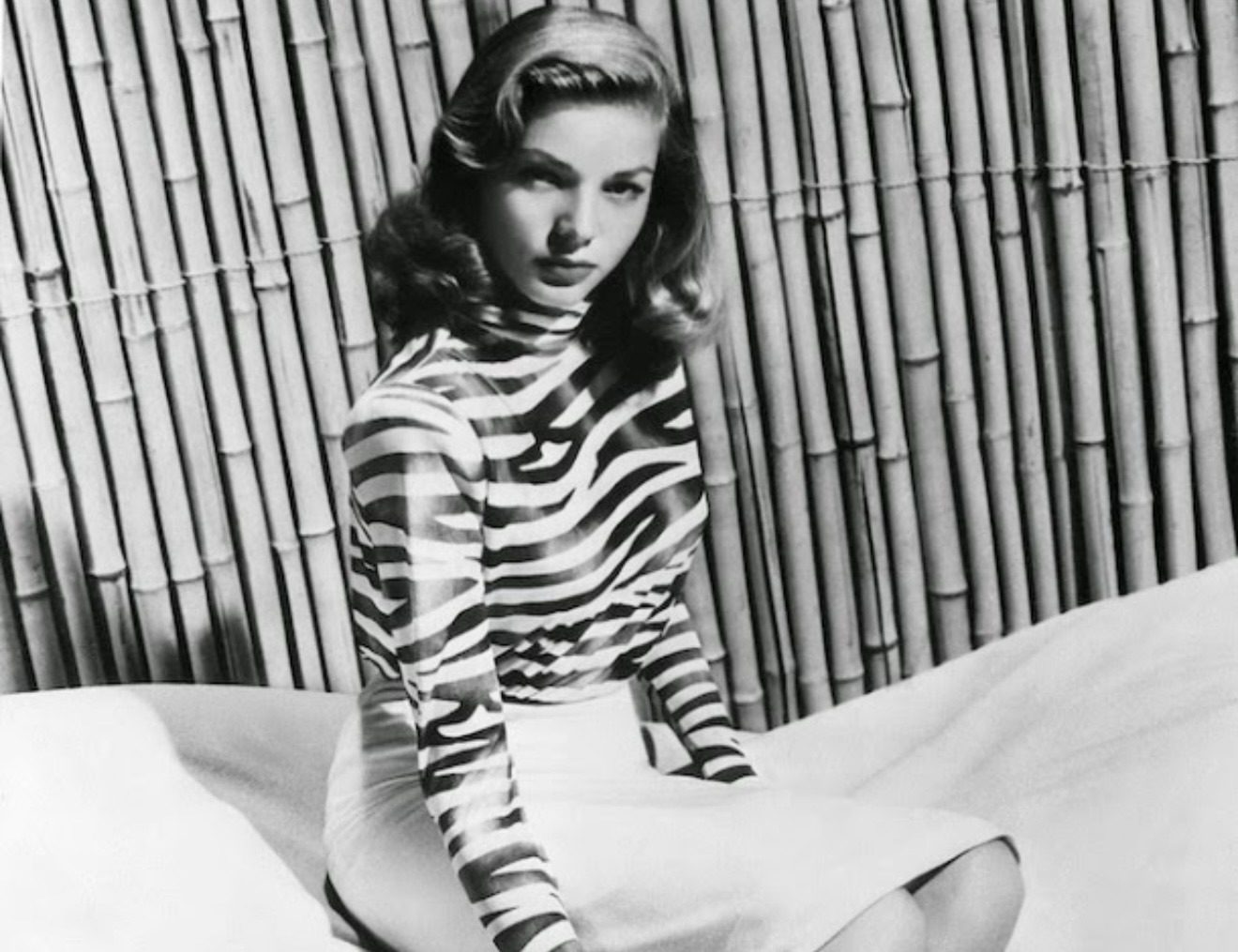
To pay her tuition at the American Academy of Dramatic Arts, Betty turned to modeling. Everything changed when she caught the eye of the formidable Diana Vreeland, the fashion editor at Harper’s Bazaar. Vreeland put the 18-year-old on the cover of the March 1943 issue. Unlike the typical smiling models of the era, Bacall looked serious. Her piercing eyes were ahead of their time, pioneering what we now know as the modern “runway stare.”
That very cover caught the attention of Slim Hawks, the wife of powerful Hollywood director Howard Hawks. Slim immediately recognized that this was exactly her husband’s type. Hawks brought the teenager to Hollywood, signed her to a contract, and set out to mold her into his ideal leading lady. He made her adopt the stage name “Lauren” and insisted on rigorous vocal training to lower the pitch of her voice, giving it that famous velvety rumble.
Her First Film and the Love of Her Life
Lauren Bacall made her silver screen debut at just 19 in Howard Hawks’s To Have and Have Not (1944). The director decided to pair his new protégé with one of the biggest stars of the era: 44-year-old Humphrey Bogart.
For the young actress, the shoot was terrifying. She later recalled:
“I was just a kid and scared to death of all these professionals around me… My head was shaking, my hands were shaking. And then I found out that if I kept my head down and looked up, my head wouldn’t shake.”
This coping mechanism birthed her signature “Look”—a perfectly calibrated mix of shyness and seduction that became her lifelong trademark.
The film also delivered one of the most famous lines in cinematic history. Playing Slim, a fiercely independent woman with a shady past, Bacall tells Bogart’s character:
“You don’t have to say anything. Not a thing. Oh, maybe just whistle. You know how to whistle, don’t you, Steve? You just put your lips together and blow.”
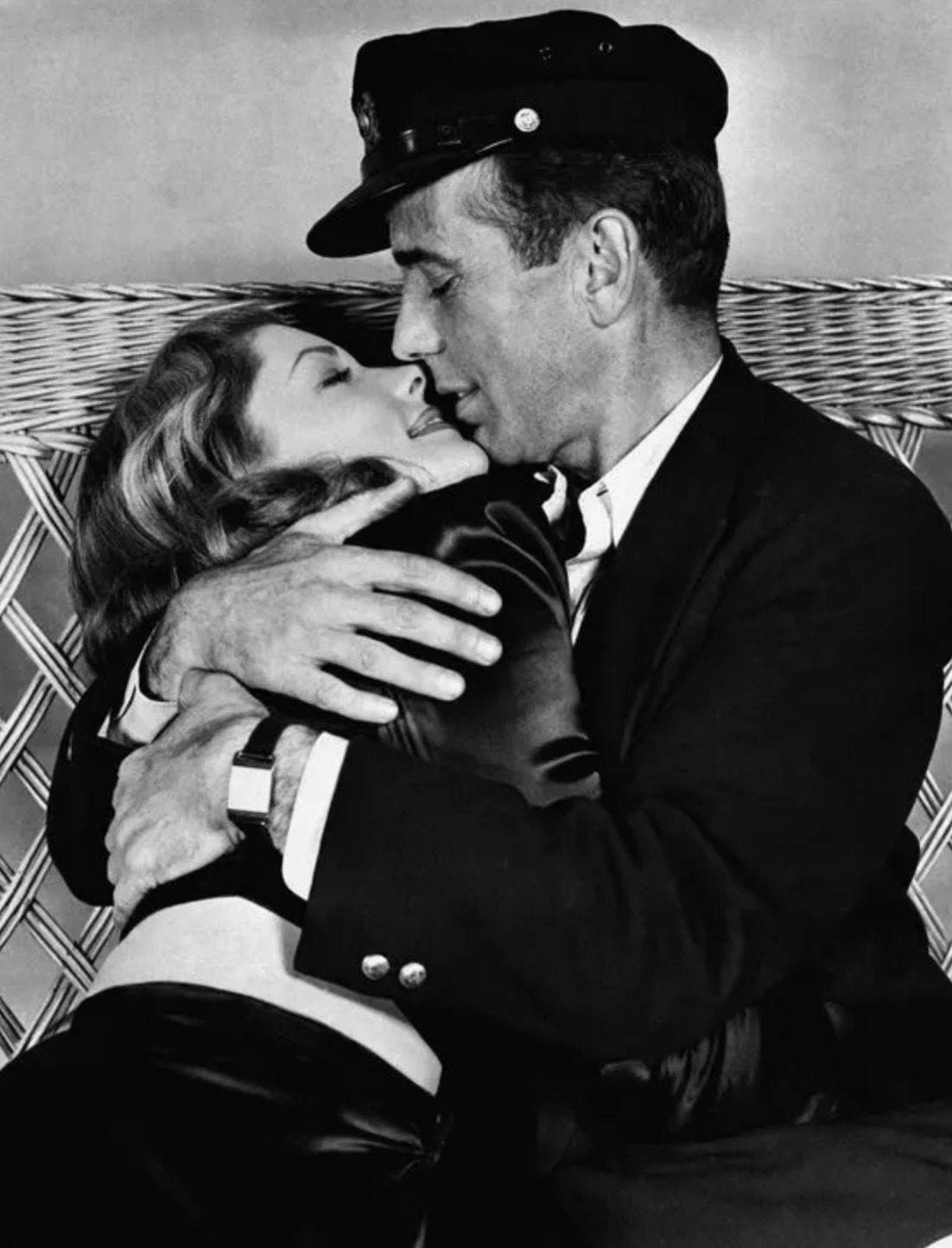
The on-screen tension was so electric and groundbreaking that director Howard Hawks actually rewrote the original script. Initially, Bogart’s character was supposed to romance another woman, but Hawks simply couldn’t ignore the incredible chemistry between his leads.
The romance between Bacall and Bogart that sparked on set blossomed into one of Hollywood’s greatest love stories. At the time, Bogart was unhappily married to his third wife, actress Mayo Methot. Her alcoholism and violent outbursts had earned the couple the nickname the “Battling Bogarts.”
Initially, the lovers met in secret—in parked cars on dark streets or during breaks on set. They called each other “Slim” and “Steve,” the names of their characters. Defying Hollywood skeptics who gossiped about their 25-year age gap, the couple married on May 21, 1945, at a friend’s farm in Ohio. At the wedding, Bogart even cried tears of joy.
They went on to star in three more classic noirs together: The Big Sleep (1946), Dark Passage (1947), and Key Largo (1948). Yet, after tying the knot, Bacall consciously put her career on the back burner to focus on her family and raise their two children, Stephen and Leslie. It was a choice she never regretted.
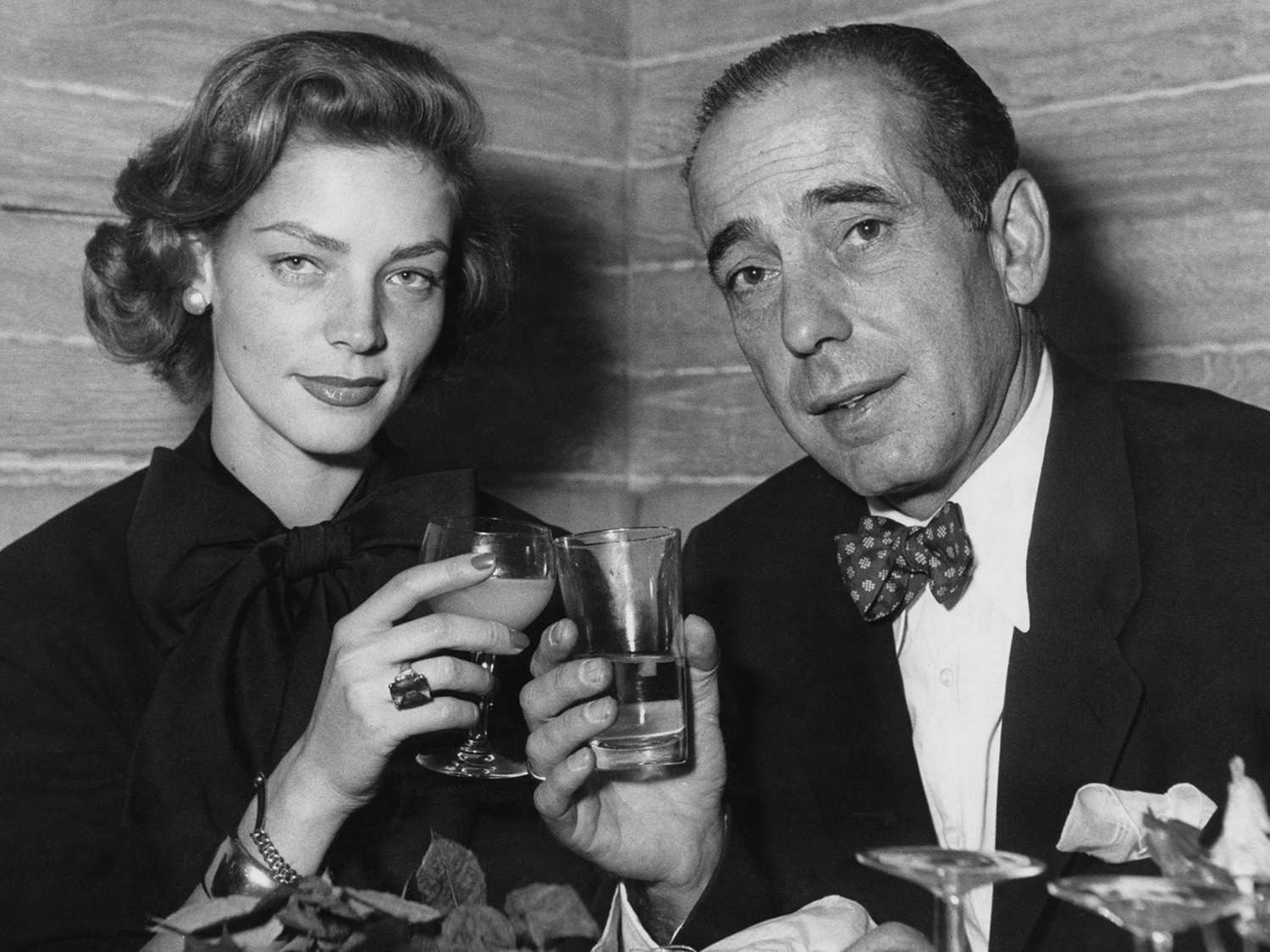
“Thank God I put our marriage first, because it didn’t last too long.”
Their union ended tragically in 1957 when Humphrey Bogart died of esophageal cancer. Bacall was left a widow at just 32.
An Icon of Style, Strength, and Principles
Modern audiences might find it strange to call Bacall a feminist icon, given her decision to sacrifice her career for a marriage to a much older man. However, her influence shines through her screen persona and her unwavering stance in life.
In To Have and Have Not, her character wasn’t your typical “bad girl” destined for jail or a tragic end. She was an equal partner who initiated the romance: she offered the money, she kissed Bogart’s character first, and she called the shots. Bacall subverted traditional gender roles, acting more like a leading man than a damsel in distress, flawlessly blending femininity with boyish bravado.
Beyond the screen, Bacall and Bogart were among the first celebrity political activists. In 1947, they helped found the Committee for the First Amendment—a group of actors and directors who pushed back against the anti-communist “witch hunts” led by the House Un-American Activities Committee (HUAC). Risking their livelihoods, the couple flew to Washington to publicly protest the committee’s tactics and defend free speech. Though intense pressure from the studios and the public later forced them to distance themselves from communists, their actions proved they were people of conscience.
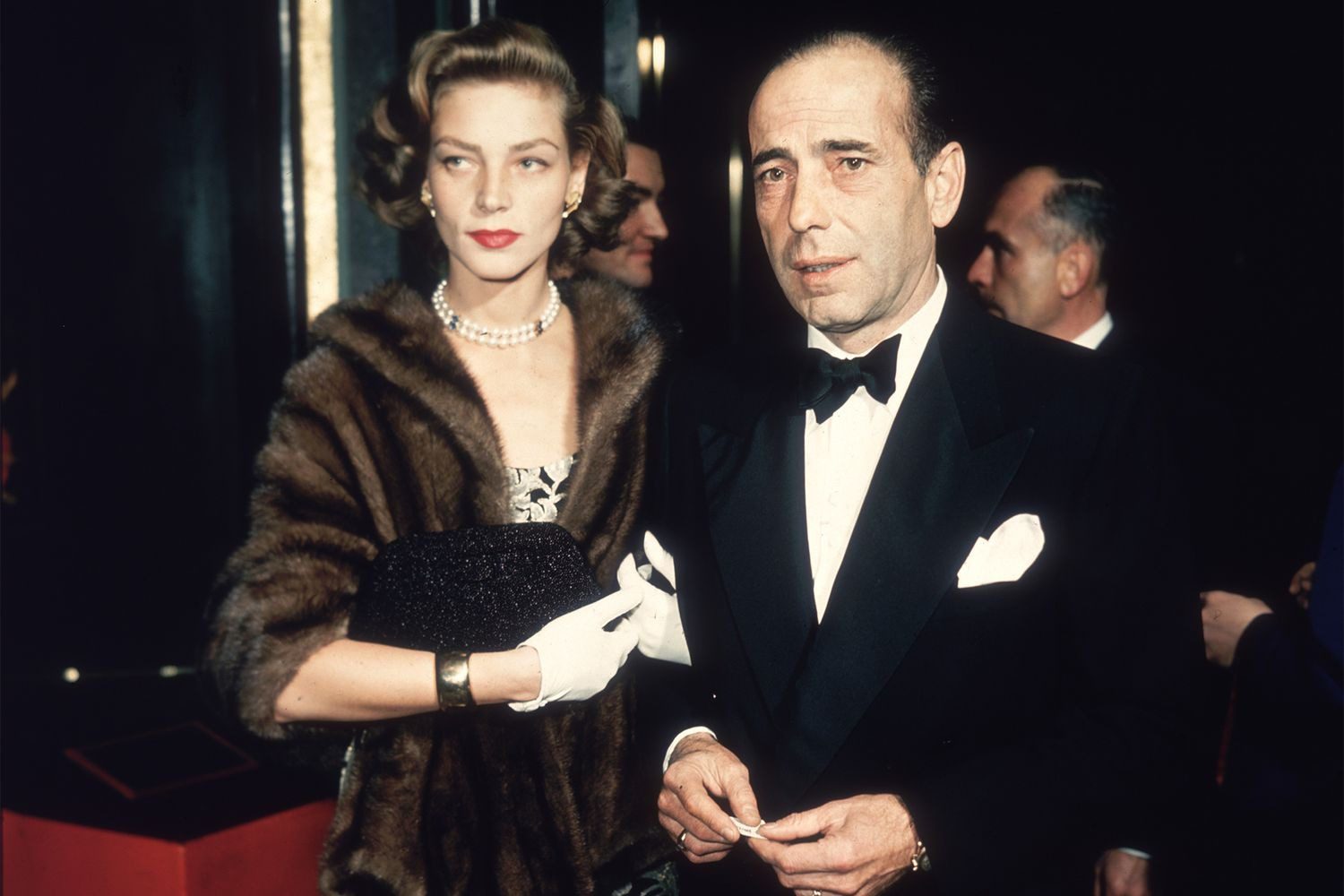
Bacall’s impact on fashion was just as profound as her mark on film. The Museum at the Fashion Institute of Technology (FIT) in New York even dedicated an exhibition to her signature aesthetic, which she playfully dubbed “studied carelessness.”
Bacall had a distinctly New York approach to dressing: practical yet devastatingly chic. She favored sharp tailoring and classic silhouettes, steering clear of fussy embellishments, vulgarity, or towering updos. Even in a simple pair of slacks and a crewneck sweater, she oozed sensuality—a stark contrast to the overt sex appeal of Marilyn Monroe.
She wore pieces by legendary couturiers like Norman Norell, Christian Dior, Yves Saint Laurent, and Emanuel Ungaro, but always on her own terms. Her ability to fuse Hollywood glamour with a masculine edge was unparalleled. It’s no surprise that in 1991, she received the Fashion Icon award from the Council of Fashion Designers of America (CFDA).
Broadway Triumphs and Late Recognition
After Bogart’s death, Bacall had to rebuild her life from scratch. In 1961, she married actor Jason Robards, with whom she had a son, Sam. Unfortunately, this marriage was deeply strained by Robards’s alcoholism and ultimately ended in divorce in 1969.
Bacall found a true creative renaissance on the stage.
“I finally felt that I came into my own when I went on the stage,” she confessed.
Her brilliant Broadway performances earned her two Tony Awards for Best Actress in a Musical for Applause(1970) and Woman of the Year (1981).
In the final decades of her life, her film career also caught a second wind. Her portrayal of Barbra Streisand’s cruel, narcissistic mother in The Mirror Has Two Faces (1996) earned Bacall her first and only Oscar nomination, as well as a Golden Globe win.
Justice was finally served in 2009 when the Academy awarded her an Honorary Oscar for her lifetime contribution to cinema. Ironically, Bacall later admitted that giving her acceptance speech was one of her worst memories.
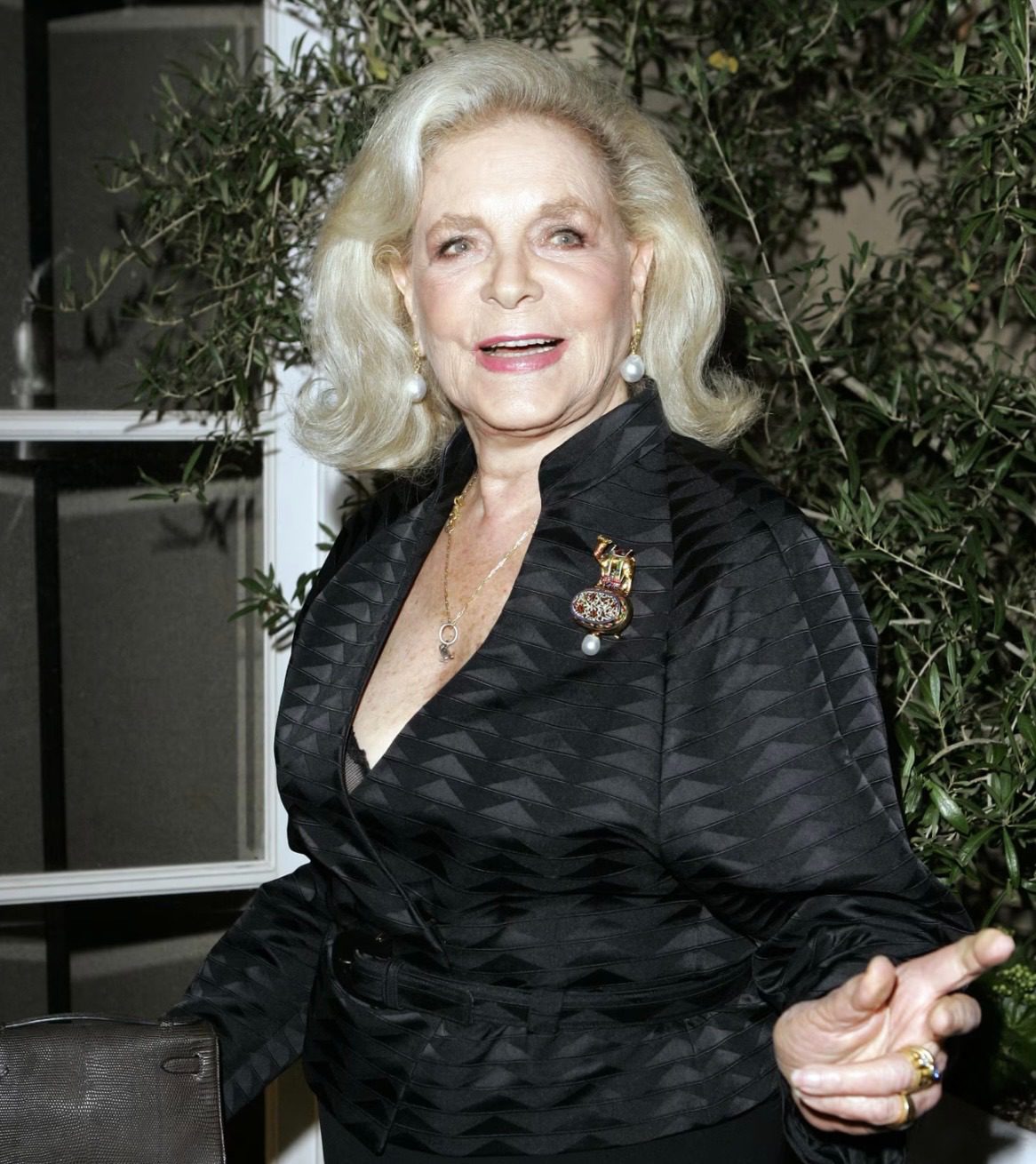
Overwhelmed by nerves, she spent most of her time talking about Bogart and completely forgot to mention her second husband, Jason Robards, or their son Sam, who was sitting right there in the audience.
“What should have been one of the best days of my life turned out to be one of the worst,” she lamented.
Lauren Bacall kept working well into her twilight years. She starred in Lars von Trier’s avant-garde films (Dogville, Manderlay) and voiced animated characters, including roles in Hayao Miyazaki’s Howl’s Moving Castle and a guest spot on Family Guy. The actress passed away on August 12, 2014, at the age of 89 in her New York apartment, leaving behind three children and the legacy of an unrivaled legend.
Her life is the inspiring story of a shy girl from Brooklyn who transformed into a global icon—a woman who not only conquered the silver screen but became a living symbol of female independence, impeccable taste, and civic courage.