

J.D. Salinger’s most famous work, “The Catcher in the Rye,” published in 1951, profoundly impacted American society. While the novel marked the peak of his career, it also signaled its end. Salinger famously sought to avoid public life, ultimately retreating from the literary world. Let’s delve deeper into the life of this extraordinary individual on newyorkski.info.
Early Life and Family
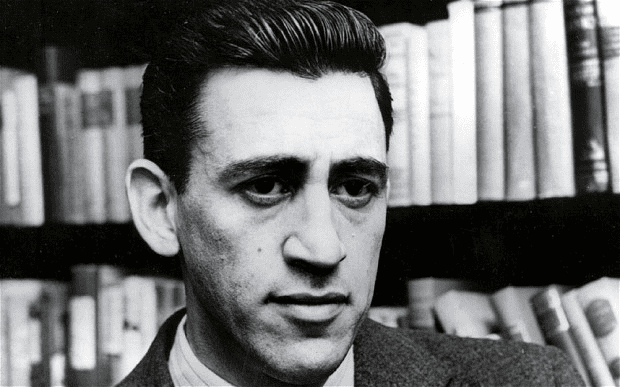
Jerome David Salinger was born in New York City on January 1, 1919. His father, Sol, was Jewish and worked as a meat and cheese importer. His mother was Catholic and of Irish descent. Jerome had an older sister named Doris. His mother raised the children in the Methodist tradition. Jerome’s relationship with his father was quite distant. His dad dreamed of Jerome earning a lot of money, achieving high social status, and continuing the family business, but these prospects held no appeal for the young man.
Growing up as a half-Jewish child in an atmosphere of Judeo-Celtic duality and antisemitism, Jerome felt an internal conflict from a young age. This contradiction largely shaped his destiny.
Jerome Salinger’s childhood was spent in New York, on the west side of Manhattan. He attended several private schools but was expelled from each due to his lack of desire to learn. Later, he enrolled in Valley Forge Military Academy in Pennsylvania, seeking to move as far away from his parents as possible.
It was during this period that Jerome began to write. He was always the center of attention, known for his sociability and ability to tell funny stories and jokes. However, he didn’t participate in parties involving alcohol. The witty young man was also the captain of the fencing team.
At a Crossroads
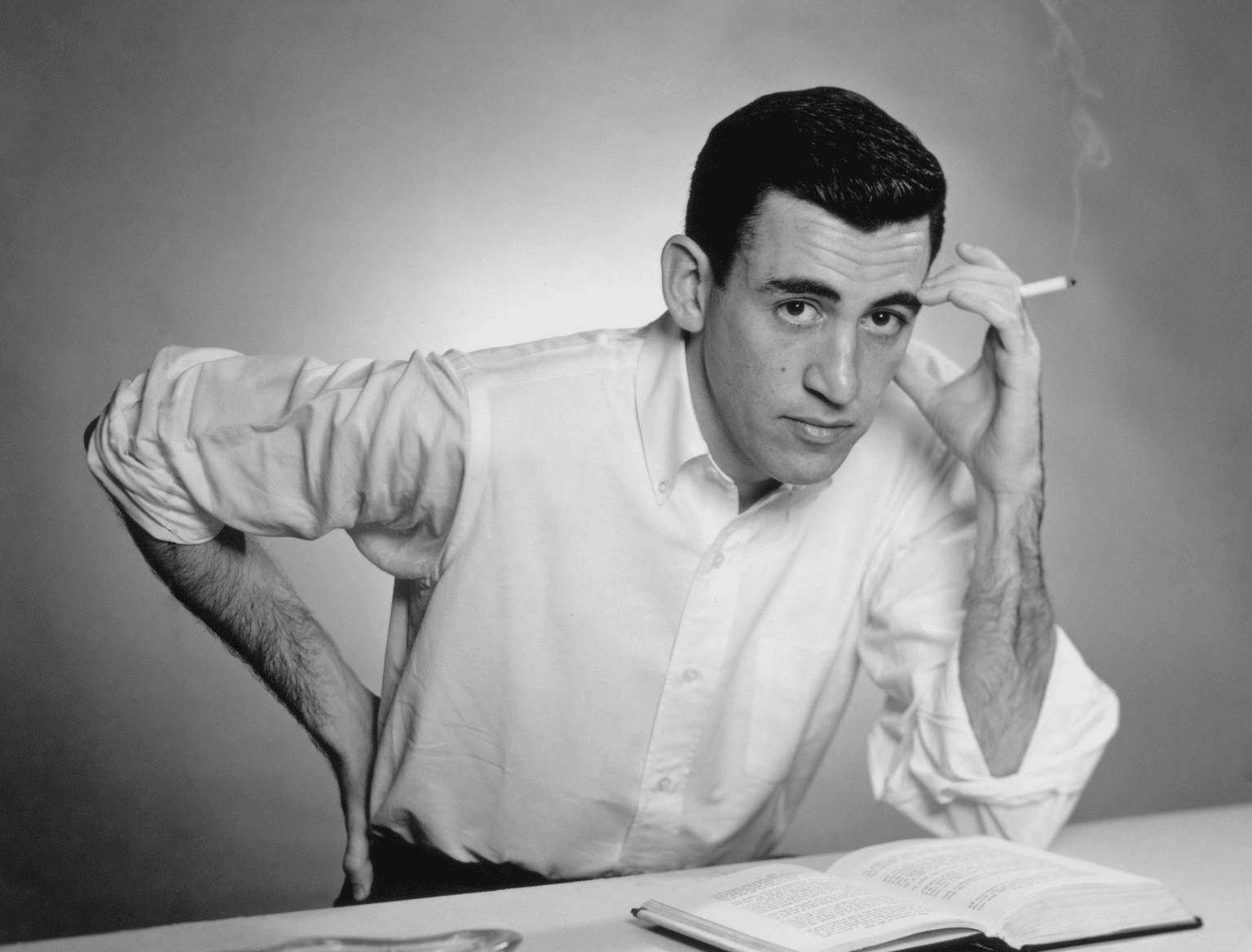
After graduating, he had to choose his next path, but young Salinger wasn’t sure what he wanted to do. His father, who still hadn’t given up hope of involving his son in the family business, took him on a trip to Poland and taught him the specifics of shipping meat products.
Jerome wasn’t interested in the business, but he eagerly embarked on the journey. The unpleasant impressions from the slaughterhouses definitively convinced the young man that this business was not for him. Out of disgust for everything he saw, Salinger even became a vegetarian. At the same time, the trip gave him the opportunity to become better acquainted with European culture and learn German.
After visiting Poland, the young man lived in Vienna for almost a year before returning home. He enrolled in Ursinus College but quickly lost interest in his studies. Moreover, he sensed antisemitic sentiments around him and refused to tolerate it.
Subsequently, young Jerome attended creative writing courses at Columbia University. They were taught by Whit Burnett, the editor of Story magazine, who remembered Salinger sitting in the back row, constantly gazing out the classroom windows. Only toward the end of the semester did he write the short story “The Young Folks.” Burnett decided to publish the 21-year-old Jerome’s work in his publication. Around this time, Salinger confidently told his friends that he would undoubtedly become a great writer and continued to write short stories for newspapers and university collections.
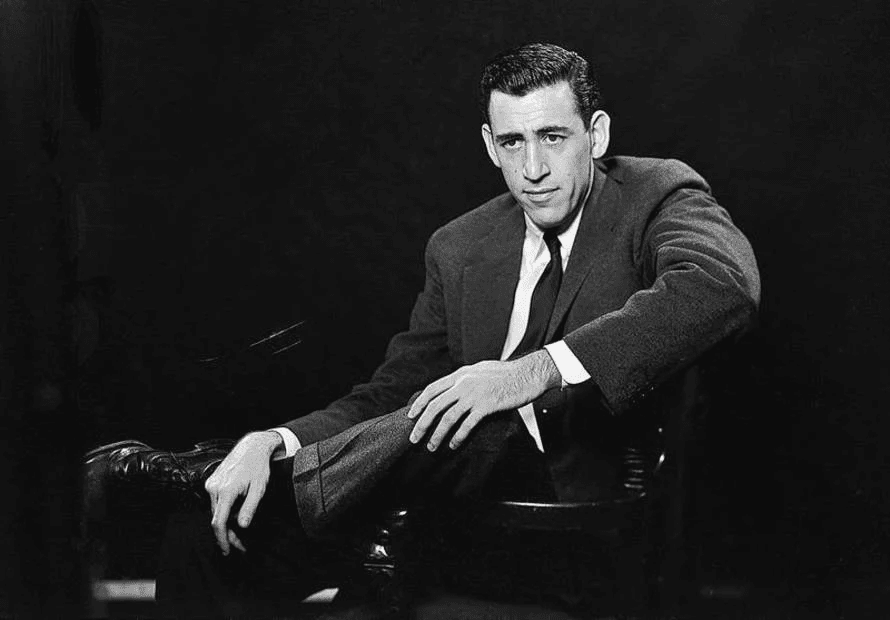
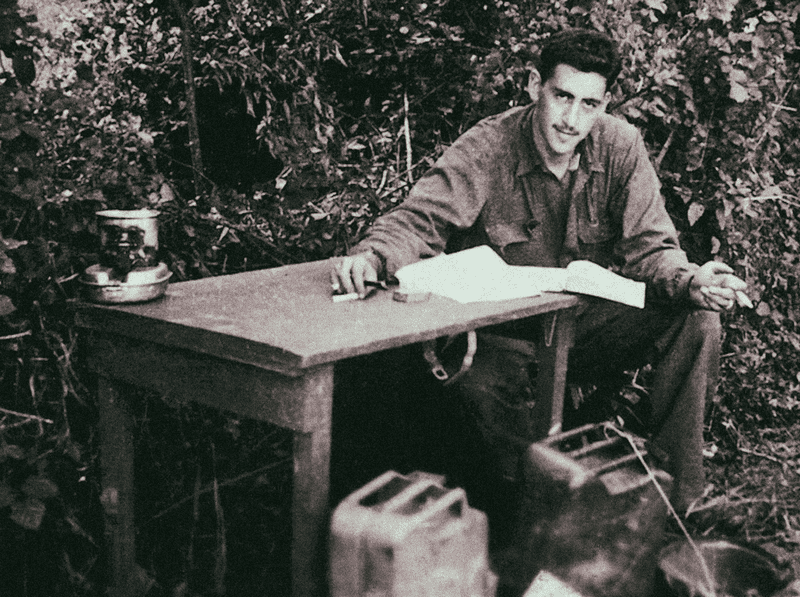
In the following years, Jerome sailed the Caribbean and even traveled to India on the Swedish liner “Kungsholm.” In 1942, he was drafted into the army. Salinger’s military service lasted two years. He participated in World War II as part of the 12th Infantry Regiment of the 4th U.S. Infantry Division. Jerome was deemed unfit for infantry service due to cardiac arrhythmia, but he didn’t try to avoid mobilization. In 1944, he participated in the D-Day landings on the coast of Normandy, serving as a communications liaison and in counterintelligence.
In 1945, Salinger was hospitalized with a nervous breakdown. Later, he expressed contempt for the Vietnam War and mocked those who volunteered for it. At the same time, his tragic wartime experience played an important role in shaping J.D. Salinger as a writer. While in Germany, he married Sylvia Welter, but the couple divorced shortly after moving to the U.S.
J.D. Salinger’s Literary Works
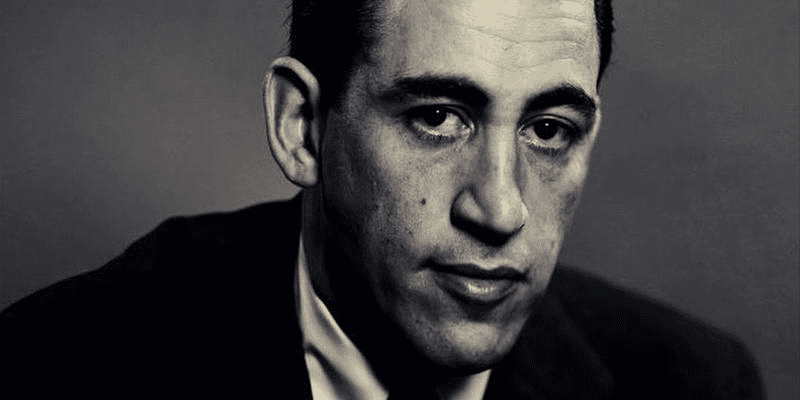
Jerome Salinger began his writing career by publishing his short stories in New York magazines. His first major success was the story “A Perfect Day for Bananafish,” which was published in 1948 in The New Yorker. This story recounts a single day in the life of Seymour Glass and his wife. Later, Salinger created a large fictional Glass family, which had seven children, and described them in a series of short stories.
After the success of his first story, the magazine offered Salinger a contract for further publications. He agreed and, in parallel, continued to work diligently on the story of Holden Caulfield, publishing fragments of it until it evolved into a cohesive novel.
In 1951, the writer’s only novel, “The Catcher in the Rye,” was released. It was praised by critics and readers and remains popular among high school and college students. They see similarities between their own feelings and the behavior and thoughts of the novel’s protagonist, Holden Caulfield. A few months after its publication, the novel topped the list of American bestsellers.
By that time, almost all of Salinger’s most famous short stories had been published, and in 1953, the collection “Nine Stories” was released. During the 1960s, the novella “Franny and Zooey” and the novelette “Raise High the Roof Beam, Carpenters” came out.
However, after the immense popularity of “The Catcher in the Rye,” Salinger effectively began living as a recluse. He refused interviews, and after 1965, he stopped publishing altogether, writing solely for himself. The writer decided to move to New Hampshire, where he bought a country house near the Connecticut River. His home was situated deep in the woods—as far away from the town and neighbors as possible.
The writer’s last known published work was the novelette “Hapworth 16, 1924,” which appeared in 1965.
Personal Life and the Writer’s Final Years
J.D. Salinger married for the second time in 1955. His chosen wife, Claire Douglas, was 15 years his junior. They moved together to the estate in Cornish. Initially, the writer interacted with the local community and even agreed to speak with students at the local school. However, when one of the students interviewed him for the school newspaper but then published it in the wider press, Salinger became furious and withdrew from further engagements. From then on, he communicated with no one except his wife.
In 1955, the couple had a daughter, Margaret, and later, a son, Matthew. Salinger was a good father, telling his children stories, but his writing career and lifestyle strained the family relationships.
During this period, Jerome Salinger wrote a series of stories about the Glass family. However, he never completed this cycle and decided to abandon literature permanently. In his opinion, popularity brought more harm than good. Therefore, he isolated himself from the outside world, refused interviews, and avoided everyone except his family. Instead, the writer became fascinated with Buddhism and Hinduism, which was reflected in his later works. Additionally, Salinger was interested in Scientology and homeopathy. These pursuits occupied his time.
In 1966, he divorced Claire. For a short time, he lived with 18-year-old Joyce Maynard, who later became a writer. In 1998, she published a memoir and also sold the writer’s letters. Peter Norton bought them and returned them to the author.
J.D. Salinger passed away in New Hampshire on January 27, 2010, at the age of 91.