

American composer George Gershwin was born and raised in New York, his parents having immigrated to the U.S. from Ukraine. He often collaborated on his creative projects with his older brother, Ira, who was a poet. Ironically, it was Ira for whom their parents initially bought a piano. But George quickly claimed the instrument, and it was a good thing he did! His talent blossomed, becoming the source of many classical music masterpieces. Gershwin’s music graced Broadway stages and was featured in films. Let’s have a closer look at the life of this celebrated composer on newyorkski.info.
Family and a Passion for Music
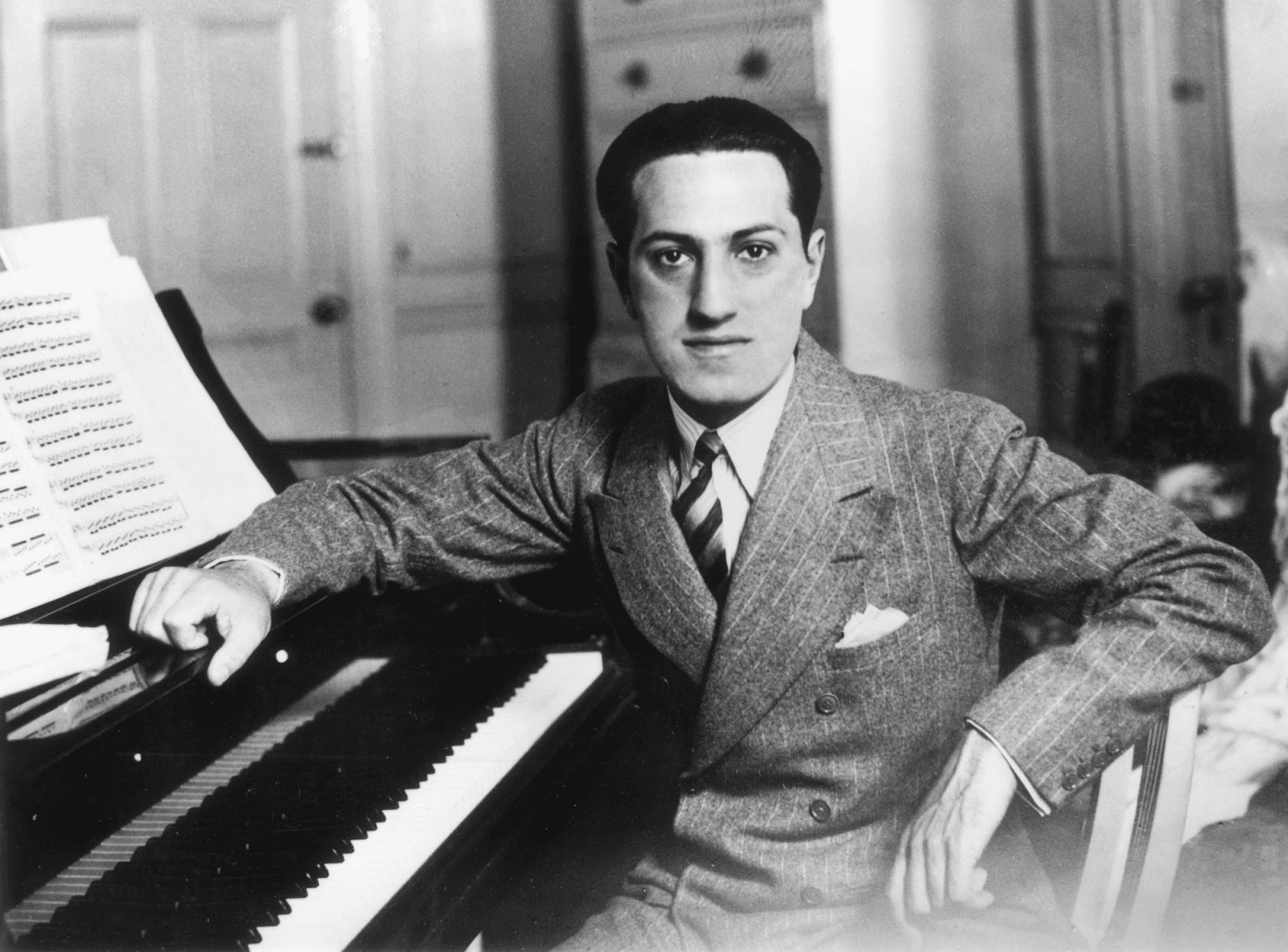
Jacob Gershowitz (George Gershwin’s birth name) was born on September 26, 1898, in New York City. His father, Moishe, hailed from Odesa, Ukraine, where he worked as a shoemaker. His mother, Rose, came from the Kyiv region. In the 1890s, both of them journeyed by steamboat to New York to start new lives, which they eventually began together.
After arriving in the U.S., the couple married. The newlyweds rented an apartment in a wooden house on Snediker Avenue. They had three sons and a daughter. Their eldest son was named Israel (Americanized to Ira), and the second was Jacob.
Their mother dreamed that her sons would become teachers, but the boys grew up to be wild and weren’t particularly interested in academics. For Jacob, everything changed after an encounter with Max Rosenzweig. Max played Dvořák’s “Humoresque” on the violin at a school concert. The music captivated young Jacob so much that he waited for the performer in the pouring rain, introduced himself, and they became friends. Rosenzweig was destined to become a famous violinist, but back then, in his childhood, he opened up the world of music to Jacob Gershowitz.
At this time, his parents had just bought a piano for Ira. However, it was his younger brother who became fascinated with playing. Initially, he taught himself, picking out his favorite melodies by ear. Later, in addition to self-study, Jacob found teachers. Over two years, he had four different instructors. Charles Hambitzer proved to be the best among them. He immediately recognized his student’s talent and did everything to refine his musical education.
Hambitzer taught with joy and enthusiasm, fostering Jacob’s talent. Thanks to him, the boy discovered the music of Johann Sebastian Bach, Frédéric Chopin, Franz Liszt, Claude Debussy, Maurice Ravel, and other prominent composers. His lessons continued until 1918, when his teacher passed away.
Musical Career: Beginnings and Development
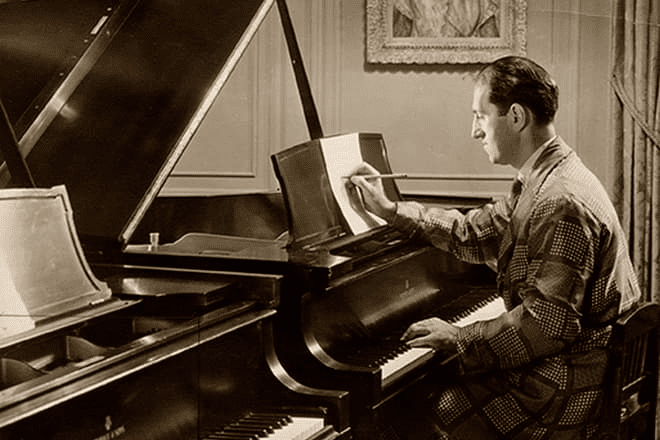
George Gershwin’s parents supported his passion for music, but they didn’t envision it as his career. In 1912, his mother enrolled him in a commercial school, but George never became a businessman. He decided to leave school and pursue music professionally.
In 1915, George landed a job as a “song plugger” at the music publisher Remick and Co. His tasks included selling sheet music and performing various musical compositions on the piano. In addition, the young man worked as a pianist in restaurants and nightclubs.
Soon, the future acclaimed composer’s first original work, “When You Want ‘Em, You Can’t Get ‘Em,” was released. The composition was a success, and Gershwin’s work caught the attention of Broadway producers. Sigmund Romberg, for example, incorporated his music into his operetta “The Passing Show of 1916.”
Between 1918 and 1919, many of the composer’s works were presented on Broadway. His song “Swanee” was included in the musical “Sinbad.” Performed by Al Jolson, it was a phenomenal success with audiences.
George Gershwin continued to develop and search for his own style. He began to incorporate jazz elements into traditional compositions. This led to the creation of the one-act opera “135th Street.” The next work, written in a mixed style, was “Rhapsody in Blue” for piano and orchestra. This composition shook the American music world. It was heterogeneous in form, had an original melody and rhythm, and a vibrant national flavor. The “Rhapsody” gained international acclaim and remains George Gershwin’s most popular symphonic work.
Interestingly, Ukrainian motifs often appeared in the composer’s works. In 1925, he wrote the operetta “Song of the Flame,” which included “Cossack Love Song,” based on the melody of “Yakhav Kozak za Dunai” (A Cossack Rode Beyond the Danube).
During this period, George Gershwin achieved fame and financial success. The family bought a five-story house on 103rd Street, and there was no longer any need to worry about money.
George Gershwin in Europe
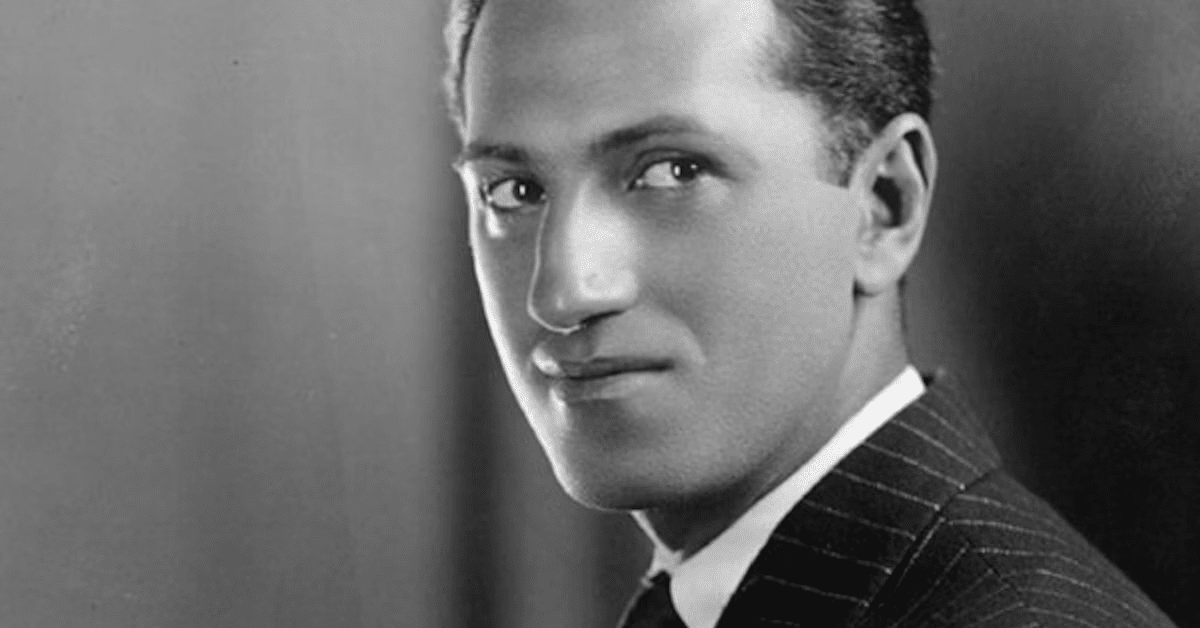
Having achieved fame in the U.S., the composer, along with his brother Ira and his wife, traveled to Europe. They visited London, Paris, and Vienna. Gershwin had the opportunity not only to showcase his own talent but also to interact with prominent European composers of the time, one of whom was Maurice Ravel.
Gershwin, who was self-conscious about his lack of formal musical education, wanted to learn from his renowned colleague. Ravel was quite surprised and asked how much he earned. Upon hearing the figure, which reached $100,000 a year, Ravel replied that he himself would like to take lessons from Gershwin!
The trip concluded in the summer of 1928. From it, the composer returned with sketches for the symphonic poem “An American in Paris.” The Gershwin brothers finished it together in 1931, and the following year, they were awarded the Pulitzer Prize. This was the first time the award had been given to a musical production.
It’s important to note that throughout this time, George Gershwin worked closely with his brother, who wrote the lyrics for his musical compositions. This creative tandem was one of the most successful and productive on Broadway.
The Opera “Porgy and Bess”
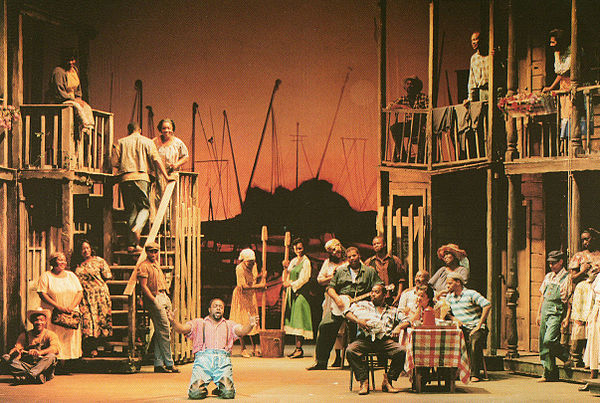
One night, George Gershwin was suffering from insomnia and decided to read something. He chose DuBose Heyward’s novel, which told the story of an American Romeo and Juliet. As he read, the composer felt the power of these characters, and melodies began to form in his mind. By morning, Gershwin had finished the work and wrote to its author, expressing his intention to create an opera based on the novel.
In late 1933, the composer traveled to Charleston twice, discussing the opera’s details with Heyward, familiarizing himself with the setting, and listening to folk music. He completed “Porgy and Bess,” which was recognized as the best opera in the U.S., on September 2, 1935. His older brother wrote the lyrics for it.
Interestingly, Gershwin wrote the popular aria “Summertime” for this opera, inspired by the Ukrainian lullaby “Oy Khodyt Son Kolo Vikon” (The Dream Passes By the Windows). He heard this composition in New York, performed by the Ukrainian National Chorus, led by Alexander Koshetz. Its first performers were Abbie Mitchell and Anne Brown, who sang it during the opera’s premiere on September 10, 1935, in Boston.
Personal Life, Death, and Legacy
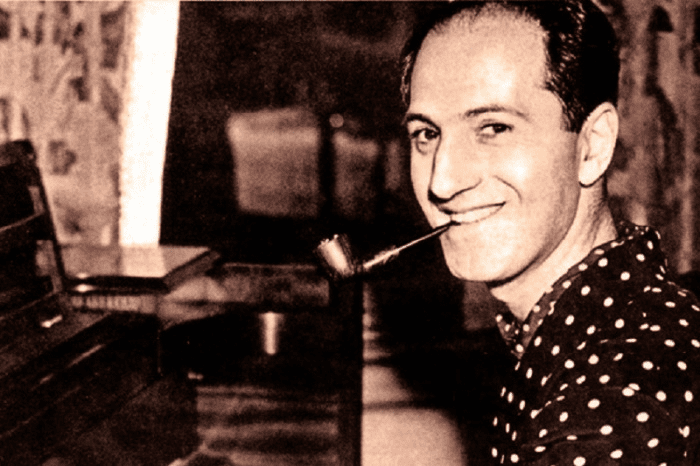
George Gershwin was not only a talented composer but also a handsome man and a wonderful storyteller. He fell in love easily and often, and the press frequently reported on his romances with famous dancers and film stars. The artist even once proposed to actress Paulette Goddard, Charlie Chaplin’s wife.
He eventually married the star of the American Yiddish theater, Freidele Oysher. The couple had a daughter, Marilyn, and a son, Michael.
After the premiere of “Porgy and Bess,” George Gershwin continued to work tirelessly. However, he was overcome by nervous tension. He couldn’t sleep or eat, became irritable, and experienced chronic fatigue. After some time, he began to forget musical notes. In July 1937, the composer was diagnosed with a brain tumor.
Gershwin was hospitalized at Cedars-Sinai Medical Center, and an attempt was made to operate. On the morning of July 11, 1937, he passed away without regaining consciousness. The composer was 38 years old.
In 1945, the painting “Rhapsody in Blue,” dedicated to the prominent composer, was unveiled. In 1985, the Gershwin brothers were posthumously awarded the Congressional Gold Medal.