

Stanley Milgram is widely considered one of the most prominent figures in the history of social psychology. His bold, and often controversial, research fundamentally changed our understanding of human nature. They vividly demonstrated just how much our social environment and authority figures dictate our actions. In this article on newyorkski.info, we will dive into his famous obedience experiment, the concept of six degrees of separation, the “familiar stranger” phenomenon, and how his ideas continue to shape our modern understanding of human behavior.
How the Memory of Evil Became a Science
Stanley Milgram was born on August 15, 1933, in the Bronx, into a world still reeling from World War I. His family arrived in the U.S. as part of a major wave of Jewish emigration. At home, there was always an underlying sense of fear, injustice, and quiet sorrow. Even during World War II, news of the Holocaust reached relatively safe American neighborhoods. For the Milgram family, this tragedy wasn’t abstract: after the war, several relatives who had survived Nazi concentration camps came to live with them for a time. It was this close proximity to surviving evil that sparked the boy’s primary intellectual interest. He wondered: how does an ordinary person become a cog in the machine of obedience? How does submission form, and what does a person actually feel in that moment?
Milgram never hid the fact that the sheer randomness of his own survival was a constant backdrop to his life. In a letter to a childhood friend, he wrote:
“I should have been born into the German-speaking Jewish community of Prague in 1922 and died in a gas chamber about 20 years later. How it came to pass that I was born in the Bronx Hospital, I’ll never quite understand.”

There is no forced drama in that statement. Rather, it’s an attempt to capture the logic of chance—something that can never be fully explained. This is exactly where his science took root. The questions Stanley asked in the lab were deeply tied to his own life story. He wasn’t just curious about blind obedience to authority. He wanted to understand how ordinary, perfectly normal people could find themselves inside a violent system and fail to stop in time.
The Experiment That Laid Bare Human Nature
In August 1961, at Yale University, Milgram launched his most famous study. This happened just four months after the trial of Nazi war criminal Adolf Eichmann began in Jerusalem. Milgram wanted to test a terrifying hypothesis: could Eichmann and millions of other Holocaust perpetrators really have “just been following orders”?
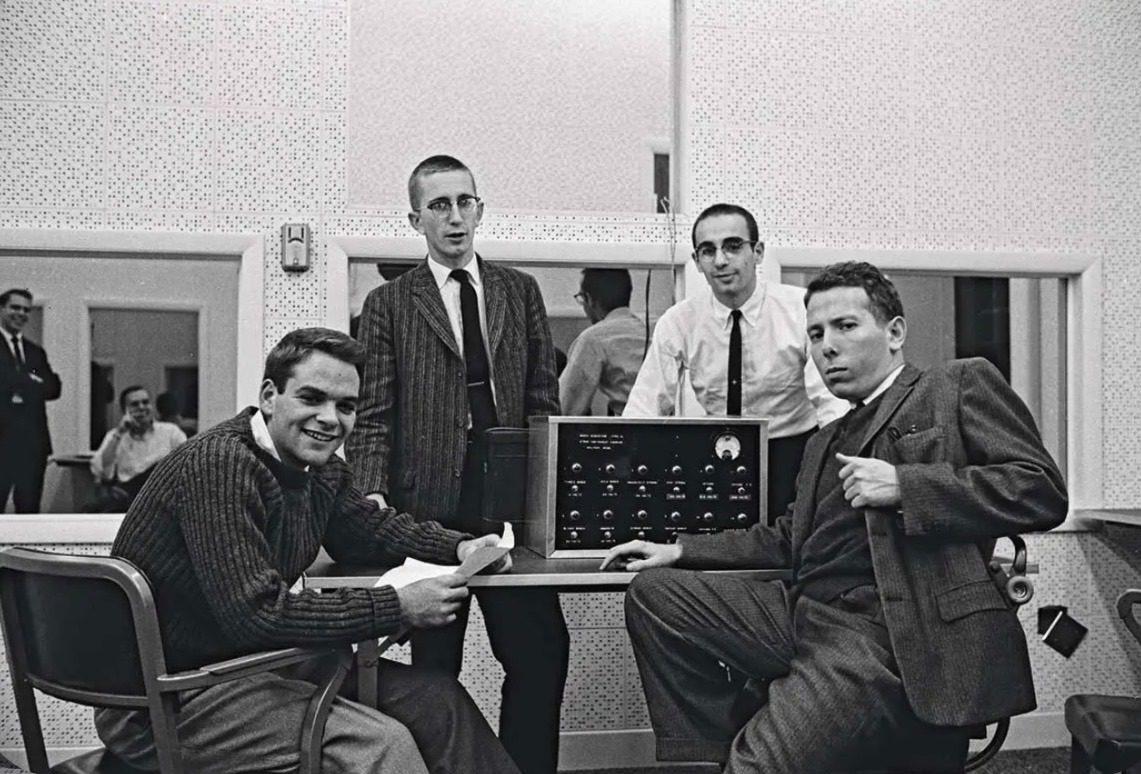
The experiment involved three people: the “experimenter” (the researcher), the “teacher” (the actual subject), and the “learner” (an actor working with the research team). The teacher was instructed to read pairs of words and punish the learner with an electric shock for every wrong answer. The voltage started at 15 volts and went all the way up to 450 volts (labeled “Danger: Severe Shock”). The learners weren’t actually being shocked, but the teachers genuinely believed they were inflicting real pain.

Before the study began, Milgram surveyed psychiatrists. They predicted that only 0.1% of subjects would go all the way to the maximum voltage. The actual results, however, shocked the world:
- 65% of the participants (the “teachers”) obeyed the orders and went to the very end, administering the maximum 450-volt shock.
- Every single participant went up to at least the 300-volt mark.
The experiment sparked a firestorm of criticism. Many subjects experienced extreme stress: they sweated, trembled, bit their lips, and some even suffered from fits of nervous laughter or seizures. On the methodological front, critics argued that the participants didn’t actually believe the shocks were real. But Milgram insisted the setup created a genuine dilemma. The person had to choose between obeying authority and ensuring the victim’s safety. Milgram later explained this phenomenon as the “agentic state”—a mindset where a person sees themselves merely as an instrument carrying out someone else’s wishes, completely absolving themselves of responsibility for their own actions.
The Experiment That Shrank the Distance Between Us
Upon returning to Harvard in 1963, Milgram began to move away from his narrow focus on individual psychology. He became fascinated by a different question: how are people in a large society actually connected? He wanted to know how many steps separated two completely random individuals.
Rather than theorizing, he decided to test this out in the real world. This led to his famous “small-world” experiment in 1967. Random people in a few cities were given packages with a specific instruction: get this to a designated target person in Boston. But there was one strict rule—you could only pass the package on to a personal acquaintance, someone you knew on a first-name basis.
The chains of delivery began to form, like a living human map drawn blindfolded. When the results were finally tallied, it turned out that the package reached the target through an average of about five to six intermediaries.
This experiment became the starting point for the “small world” concept, proving that even people who seem completely disconnected aren’t really that far apart.
With the dawn of the internet, this hypothesis found new life and was tested on a massive scale. Social networks began measuring what had previously only been intuition. For instance, Facebook algorithms recorded a gradual shrinking of the distance between users. This showed not only that the world had “shrunk,” but that the connections between people had become denser, faster, and less predictable. What was once a field experiment had become the everyday reality of the digital age.
Familiar Strangers: Milgram’s Later Research
When Stanley Milgram returned to New York, he found himself in an environment that was a massive laboratory in its own right—just without walls or beakers. At the City University of New York (CUNY), he headed the social psychology program. Gradually, his focus shifted from abstract networks to the living, breathing nervous system of the metropolis.
He wasn’t just interested in how people were connected anymore; he wanted to know how they managed to tolerate living in such constant, close quarters with one another. This is how the concept of information overload became a staple in his work—a state where the city literally gives the psyche no time to rest.

According to Milgram, the core issue with big cities isn’t apathy itself, but an overload of sensory inputs. Every day, a person is hit with so many social cues—glances, gestures, noise, random interactions—that they are forced to develop protective filters. Otherwise, they would simply burn out. It’s these very filters that create the illusion of coldness and detachment, when in reality, it’s just a survival mechanism in a hyper-dense environment.
In 1972, Milgram coined another term that has since become commonplace: the “familiar stranger.” These are the people we see regularly but never interact with—passengers on the morning subway, bystanders at the usual bus stop, faces on our daily commute. They sort of blend into the background of the city, recognizable yet silent.
Milgram’s students even conducted a field study on this. They took photos of people at train stations and showed them to other commuters. The results were telling: 89% of respondents recognized at least one person they had never spoken a single word to.
Milgram didn’t view this paradox—recognizing a face but having no contact—as a weird quirk, but rather as a natural adaptation. In a city where there’s simply too much going on, the mind chooses an economy mode: observing without engaging. This is exactly how a unique urban social dynamic is formed—dense but reserved, packed with people yet built on a strict foundation of keeping your distance.
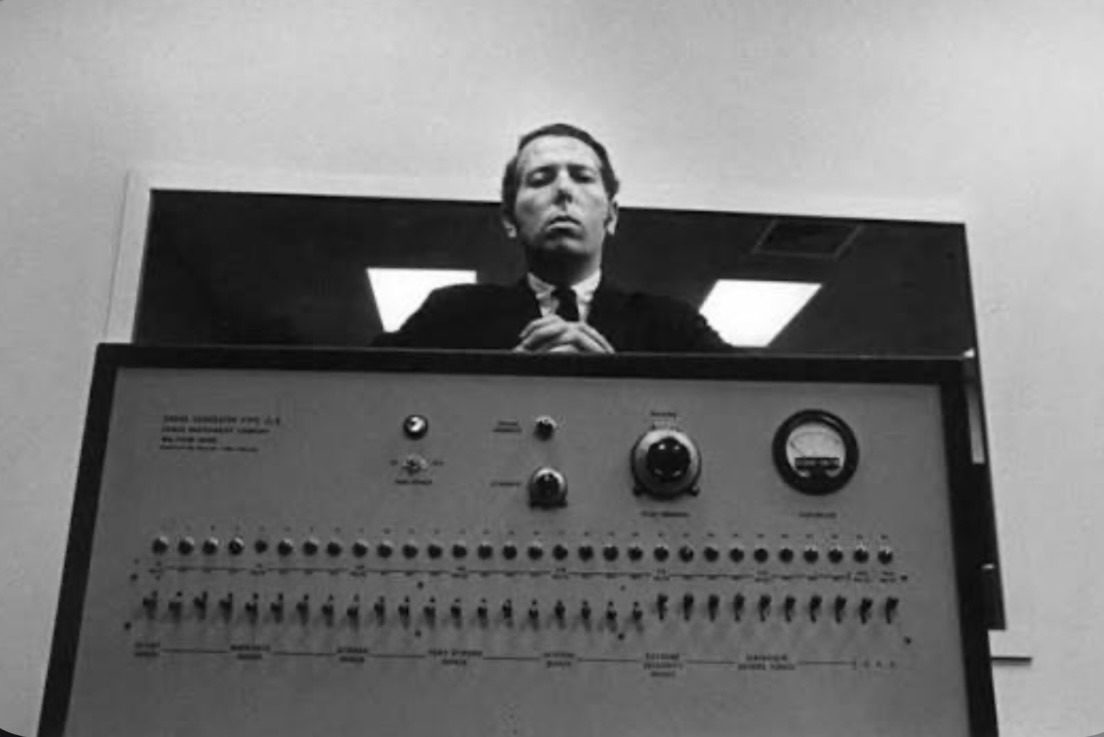
Stanley Milgram passed away from a heart attack in 1984 at the age of 51. However, his experiments have gone down in history as a powerful reminder of the fragility of human morality and the hidden depths of our social ties.
His work doesn’t just inspire awe; it forces us to look into the mirror of our own conscience. In Milgram’s own words:
“Ordinary people, simply doing their jobs, and without any particular hostility on their part, can become agents in a terrible destructive process.”
But at the same time, his network studies prove something else entirely: no matter how geographically far apart we might be, socially, we are linked by a chain of just a few handshakes.