Martha Stewart managed to turn her own lifestyle into a world-renowned brand long before blogging became a mainstream phenomenon. Her passion for culinary arts, gardening, home decor, and entertaining laid the foundation for a media empire spanning best-selling books, magazines, and hit television series. Today, her name graces cookware, furniture, home accessories, apparel, and food products that find buyers around the globe. Yet her path to the top was anything but simple: Martha journeyed from a Wall Street stockbroker to a corporate titan, weathered a high-profile legal scandal, and staged a triumphant return to the spotlight. Discover how Stewart built her empire, captivated a multimillion-strong audience, and turned the art of domestic living into a thriving enterprise in this article on newyorkski.info.
From Wall Street to the First Steps in Business: The Early Career of Martha Stewart
Today, the name Martha Stewart is synonymous with culinary excellence, impeccable home styling, and gracious living. Yet her path to global prominence began long before her first books and television appearances—rooted in childhood interests, relentless hard work, and a drive to find her true calling. The renowned entrepreneur, author, and television personality grew up in a bustling household with five siblings. Her parents were teachers, meaning she was raised under strict discipline and sound educational principles. From an early age, Martha exhibited a fierce perfectionism that would stay with her for life. It showed in everything she touched: she excelled in school, took on numerous extracurriculars, earned money through side jobs, and carried her weight at home. In a large family, household chores were shared equally: the children sewed their own clothes, cooked meals, and tended the garden—and Martha genuinely loved every minute of it.
Martha began earning her own money as a teenager: babysitting for neighbors, organizing parties, and working as a model. She enjoyed the work, but more importantly, it allowed her to save for higher education. She enrolled at Barnard College in New York City, where she studied history and architectural history. Alongside her academic pursuits, she modeled for prestigious brands such as Chanel and Unilever, while also considering a career in teaching. During her college years, she met Andy Stewart, whom she soon married. Family life opened the door to an unexpected career pivot: her father-in-law worked on Wall Street, prompting Martha to try her hand in high finance. In 1967, she became a stockbroker at Moness, Horstman, Williams and Sidel. She quickly proved to be a natural trader—by her own admission, she invested exclusively in companies whose potential she wholeheartedly believed in.
After seven successful years on Wall Street, Martha pivoted once again. Relocating to a historic farmhouse in Westport, Connecticut, she partnered with a friend to launch a boutique catering enterprise. Event planning was not completely new to her—she had hosted her first party at the age of ten. Nevertheless, she had to master the business on the fly, as specialized literature on catering, decor, and event management was virtually nonexistent at the time. Operating out of her own home kitchen also created plenty of bureaucratic hurdles. Starting with modest classified ads in local newspapers, Martha’s catering operation grew rapidly, eventually orchestrating lavish galas for more than 300 guests. Her greatest revelation was realizing she could handle projects of virtually any scale and complexity with poise. It was an endeavor that brought her creative fulfillment, high acclaim, and substantial profits.

Cookbooks and Television: Reaching a Mass Audience
While running her catering company, Martha forged numerous influential connections. One encounter proved life-changing: she catered an event for Alan Mirken, the head of Crown Publishing Group. Duly impressed by her craftsmanship and hospitality, the publisher immediately spotted her commercial potential. He proposed that Martha write a book sharing her entertaining secrets and signature recipes. Thanks to her husband’s career in publishing, Martha already understood the industry landscape and embraced the opportunity. In 1982, she released her debut book, Entertaining. It marked another pivotal turn in Stewart’s career and launched a massive franchise. The book debuted with an ambitious print run of 35,000 copies at a premium price of $35. It was a bold gamble for the era, but Martha knew her audience. Having learned the nuances of cooking and decorating firsthand, her practical advice resonated deeply with readers. The initial run sold out rapidly, prompting the publisher to order multiple reprints.
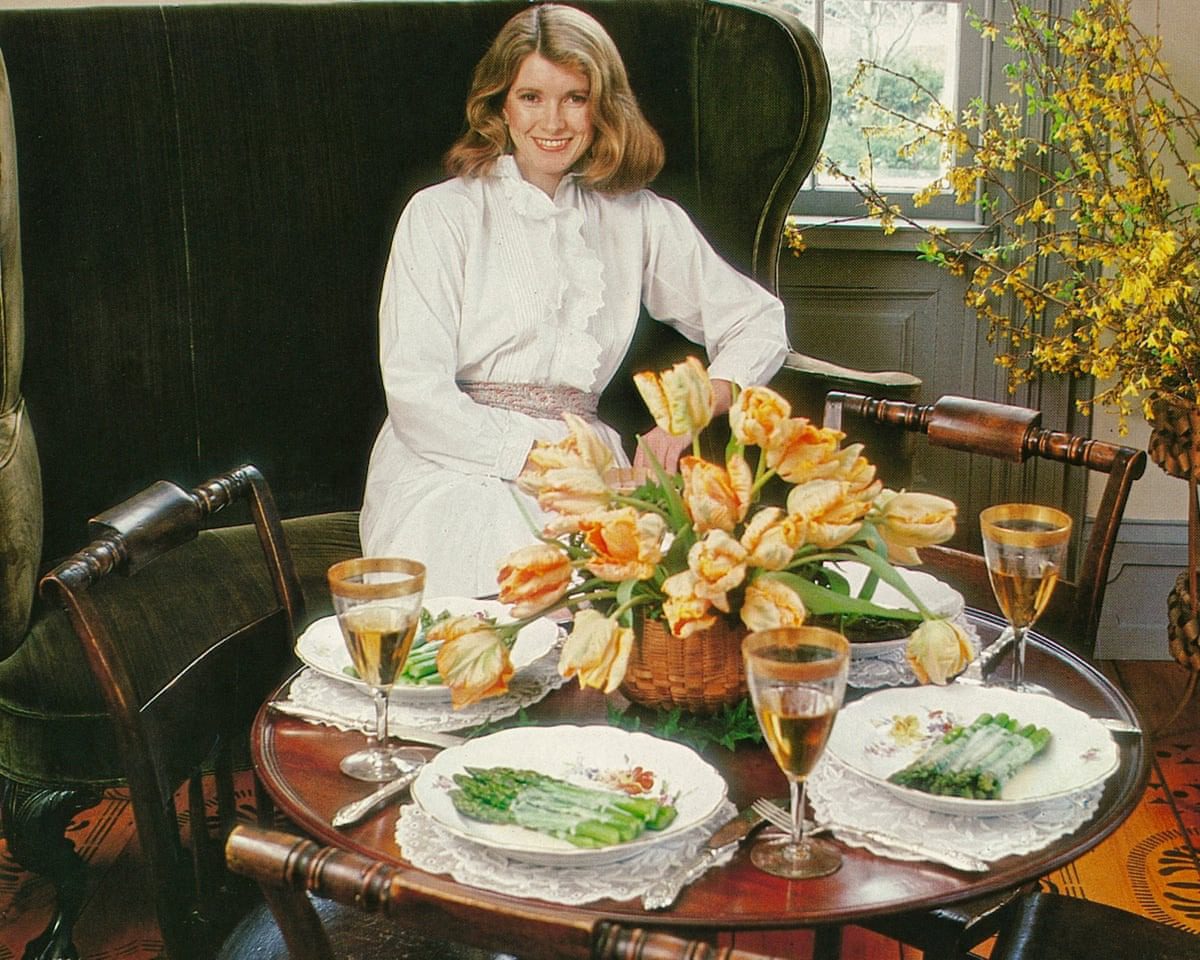
Entertaining laid the cornerstone of Martha Stewart’s lifestyle empire. Authoring the book allowed her to turn hands-on experience into undisputed authority within a previously untapped niche. She wrote about what she knew intimately: foolproof recipes, tablescapes, party themes, and the art of gracious hosting. Inquiries flooded in from eager readers, and Stewart answered their questions in a steady stream of subsequent publications. The scope of her books broadened rapidly, covering virtually every facet of domestic life. Writing came naturally to her, leading to an annual cadence of new releases covering weddings, quick hors d’oeuvres, Christmas decor, and festive gatherings.
Stewart took her media venture to the next level in 1990 with the premiere of Martha Stewart Living magazine. The periodical format allowed her to share seasonal recipes and creative ideas on a regular basis. Remarkably, while an economic downturn forced many established lifestyle magazines to shutter, Stewart’s publication struck an instant chord with readers, repeatedly selling out print runs. Capitalizing on that momentum, she launched an eponymous television show in 1993. It served as both a showcase for her expertise and an engine for brand expansion. Originally airing weekly as a half-hour segment, the show’s soaring ratings soon transformed it into a daily, hour-long broadcast. Stewart was thriving at a relentless pace that had long since become second nature.
Martha Stewart Living Omnimedia: From Personal Brand to Business Empire
Through her books, magazine, and television programming, Martha Stewart was not merely dispensing domestic wisdom—she was systematically building a personal brand. While she may not have fully grasped the magnitude of her cultural influence at the outset, peers and colleagues consistently praised her business acumen. In time, she realized she had been pioneering modern branding all along. What set her apart was authenticity: she never had to fabricate an image, because the enterprise was built entirely around her actual way of living. Her daily routines, personal aesthetics, and practical skills translated into hundreds of commercial products eagerly embraced by consumers. As the Martha Stewart name gained ubiquity, her company and team grew in tandem. In 1997, she consolidated all her business ventures under the banner of Martha Stewart Living Omnimedia, taking the company public on the New York Stock Exchange in 1999. The move cemented her status as America’s first self-made female billionaire.
Martha Stewart Living Omnimedia was no overnight phenomenon; it was the product of steady, strategic expansion. Its founder successfully scaled a media and publishing platform into a multifaceted retail powerhouse. The Martha Stewart imprint quickly became a household hallmark for quality, refined comfort, and accessible elegance. In 1997, Stewart struck a landmark retail partnership with Kmart, rolling out the Martha Stewart Everyday collection. The line spanned home furnishings, bed and bath textiles, kitchenware, interior paints, and home accessories. Guided by her lifelong creed of continuous learning, she pushed her brand into diverse lifestyle categories, constantly pioneering new crafts and sharing her personal discoveries with the public.
Because her enterprise mirrored her own life, Martha was under constant pressure to meet the soaring expectations of her audience. Balancing every demand was no easy feat, but her disciplined work ethic allowed her to monetize nearly every facet of daily routine. Even when company operations could have functioned smoothly without her direct oversight, Stewart refused to take a back seat. She personally verified every recipe and tested every piece of cookware, fiercely guarding consumer trust. Every hobby she mastered was swiftly converted into expert advice or a tailored product line. Her brand expanded across every channel—television broadcasts, print titles, digital media, and retail shelves—enabling millions of followers to integrate her aspirational aesthetic into their own homes.

Scandal, Prison, and a Triumphant Comeback: How Martha Stewart Maintained Her Influence
The Martha Stewart brand thrived on an image of domestic perfection that millions aspired to replicate. Yet in 2001, that immaculate facade was shaken when Stewart became embroiled in a scandal involving the sale of ImClone Systems stock. The following year, federal authorities launched an insider trading investigation after she sold her shares just before a steep price collapse. Although Stewart maintained her innocence, a high-profile trial in 2004 ended with her conviction on charges of conspiracy, obstruction of justice, and making false statements. She was sentenced to five months in federal prison, five months of home confinement, two years of probation, and substantial fines. Stewart was forced to step down from her executive roles at her own company and pause her television show along with other projects. The most devastating blow, however, was the immense damage inflicted on her public reputation.
Her time behind bars proved both challenging and surprisingly restorative. In the face of adversity, Stewart stayed true to her habits: she knitted, sculpted ceramics, and kept a journal. She later admitted that the forced hiatus offered a rare pause from her grueling corporate schedule. Although she was barred from daily management, her company had attained enough organizational maturity to function independently. The controversy undeniably hurt the brand, but the underlying product quality kept loyal consumers buying. Upon her release, Martha set her sights on a total comeback—a determination that astonished even her harshest critics. Refusing to let unfortunate circumstances define her public standing, she dove back into work with renewed vigor.
In 2005, she made a dual return to television with the daytime program Martha and the reality spinoff The Apprentice: Martha Stewart. While ratings did not match her historic prime, she refused to slow down. In the ensuing years, her brand rolled out new bestsellers, fresh magazine editions, lines of apparel, furniture, cookware, gourmet foods, and even branded housing developments. In 2011, Stewart officially returned to the board of directors of her company. Though the firm faced an initial post-prison slump, her resilience guided it toward renewed profitability. Meanwhile, her cultural standing was revitalized through high-profile media appearances, including an unexpected, beloved partnership with Snoop Dogg and a memorable appearance at the Justin Bieber roast. Martha embraced modern pop-culture trends with wit and self-deprecation—appearing in films, starring in high-fashion modeling campaigns, and launching her own podcast. Martha Stewart’s story is not merely a blueprint for building an enduring brand; it is an inspiring testament to resilience, reinvention, and the power of a second chapter.