

One of New York City’s most vibrant and whimsical festivals. From the very beginning, it was conceived as a tribute to the rich, century-old history of Coney Island—a neighborhood where art and the sound of the ocean converge. Today, the Mermaid Parade is not just a costumed procession; it’s a symbol of creative freedom. It preserves the spirit of old carnivals and restores the glory of a place where anyone can be themselves, or anything else they wish to be. Read on newyorkski.info for more about this celebration of waves and fantasies.
The History of the Mermaid Parade
Every summer on the streets of Coney Island, a real sea fairy tale comes to life—the largest art parade in the U.S. and a dazzling event that officially opens the New York summer. This incredible celebration is organized by the non-profit arts organization Coney Island USA, founded in 1980 by the charismatic Dick Zigun—a man local residents affectionately call the “unofficial mayor of Coney Island.” It was within its walls, in the legendary building at 1208 Surf Avenue—which now houses the Freak Bar, the Sideshow by the Seashore theater, a museum, and a souvenir shop—that the idea for the parade was born. Today, it draws over 3,000 participants and hundreds of thousands of spectators annually.
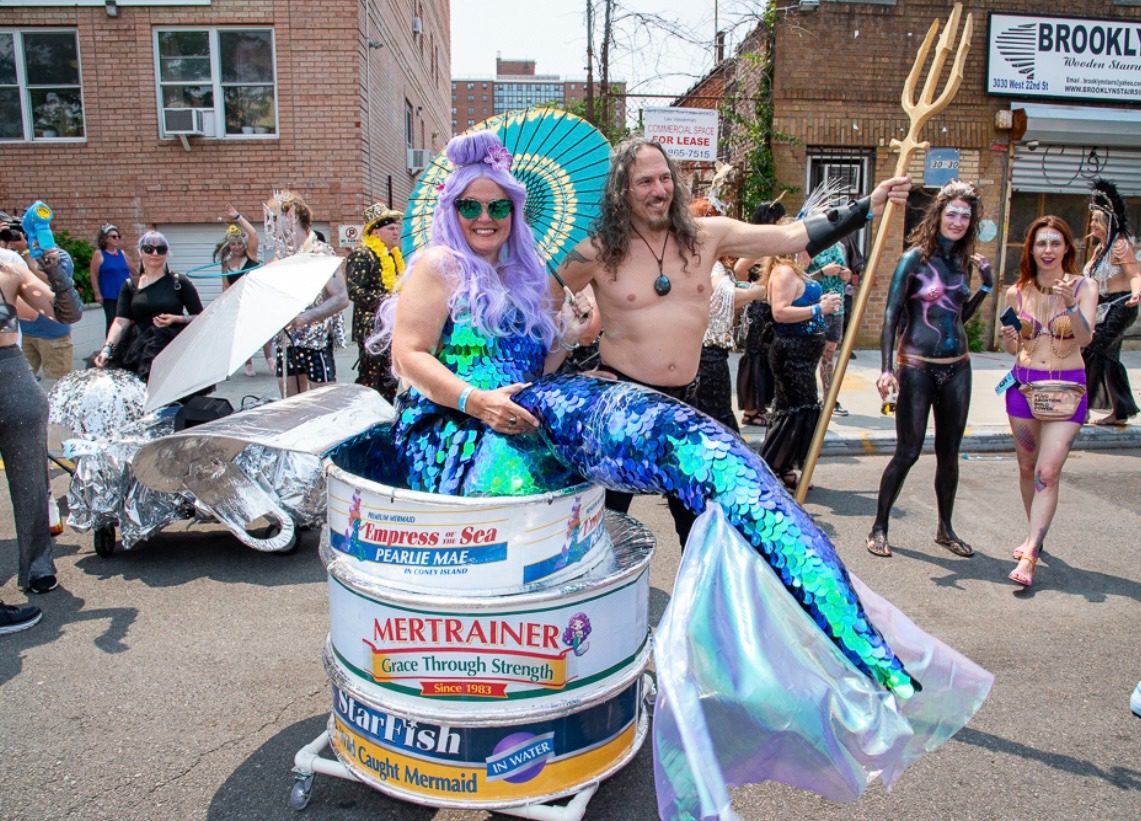
The event’s roots trace back to the early 20th century—to the Mardi Gras parades at Coney Island (1903–1954), when the coastline transformed into an endless celebration of carnival costumes. The tradition also draws inspiration from ancient African water festivals and ancient pagan rites that celebrated the sea and life.
However, the history of this vibrant, fantastic parade has weathered storms. In 2013, after the devastating Hurricane Sandy, it was on the verge of cancellation. But thousands of people rallied on Kickstarter and raised over $117,000, saving the tradition.
When the pandemic halted the world in 2020, the organizers did not give up—instead of the usual parade, a virtual “Tail-a-Thon” was held, proving that the spirit of the mermaids will not drown even in the deepest waves of crisis.
Every year, on the Saturday closest to the summer solstice, Coney Island once again transforms into a magical lagoon of art and freedom. The Mermaid Parade is a celebration of self-expression without boundaries or labels, free of politics or religion. It is a triumph of the human imagination, where the ocean of fantasy merges with the energy of New York.
Waves of change may come and go, but the mermaids of Coney Island always return—to remind the city once again: true art lives where people are not afraid to dream.
How the Mermaid Parade Works
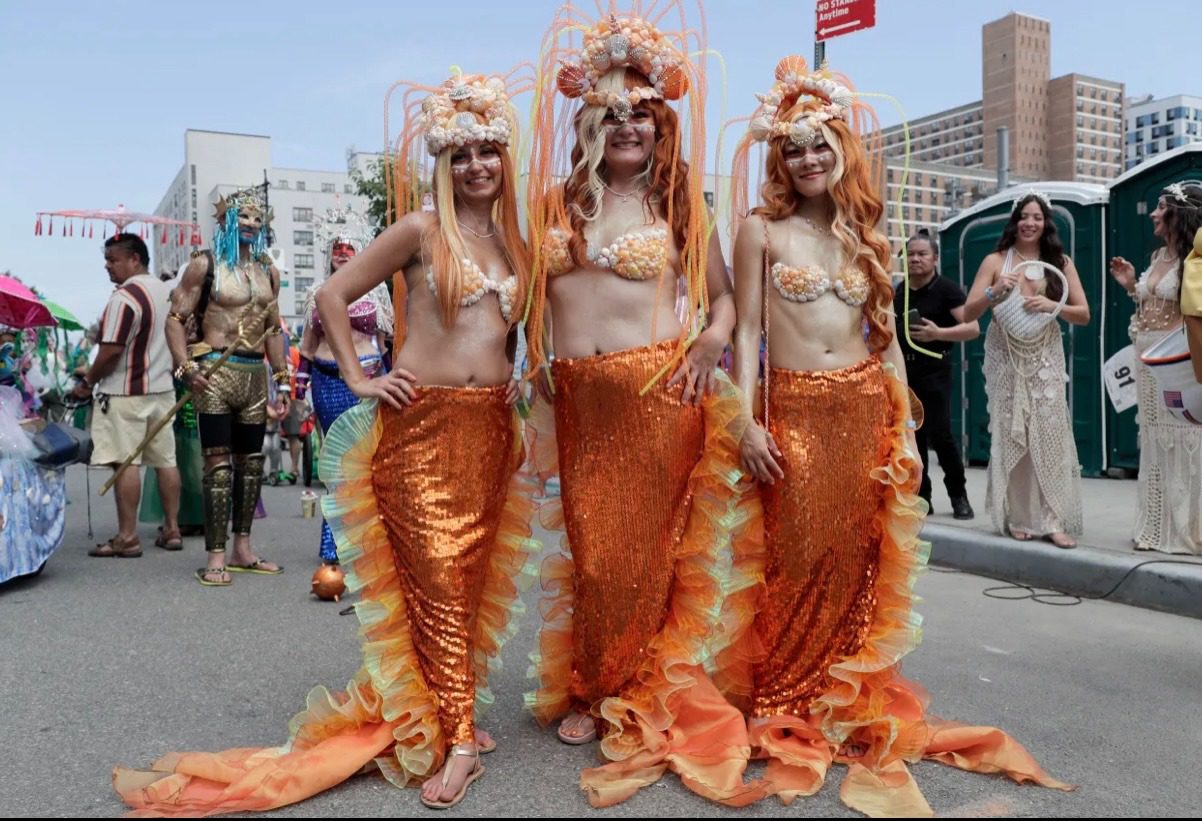
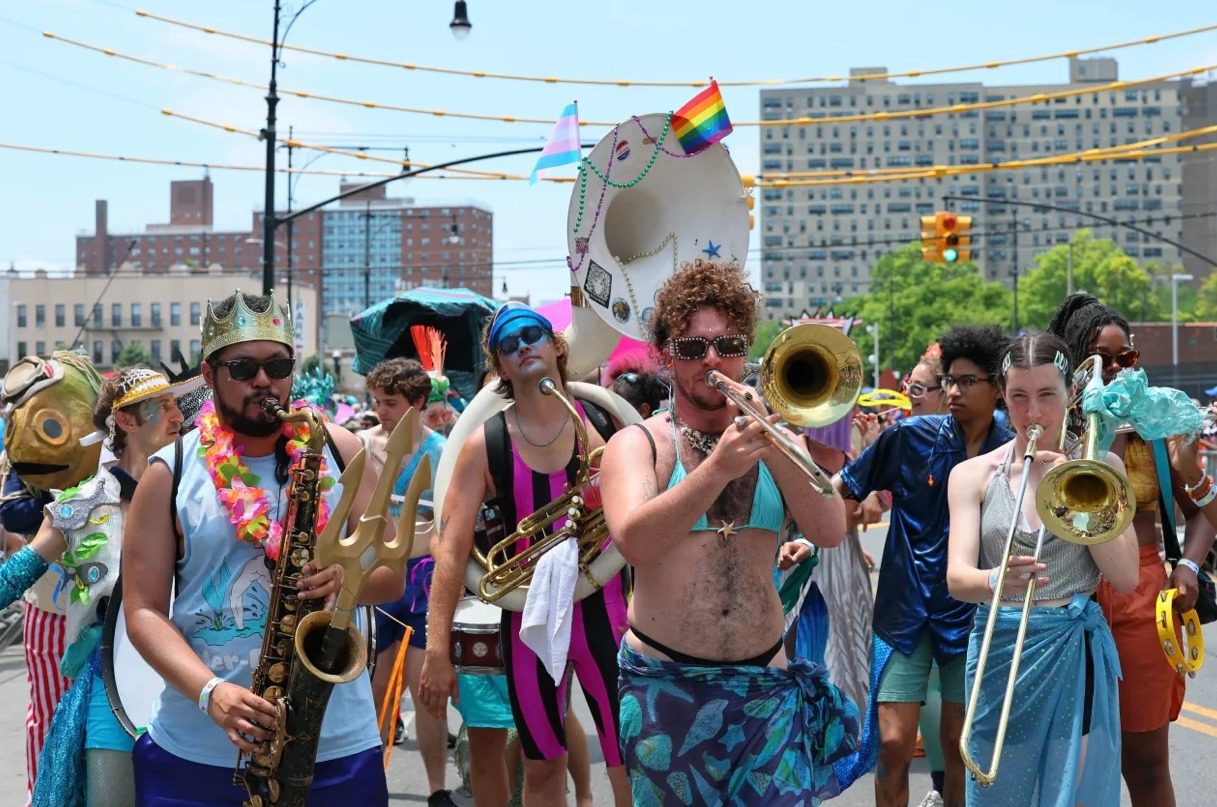
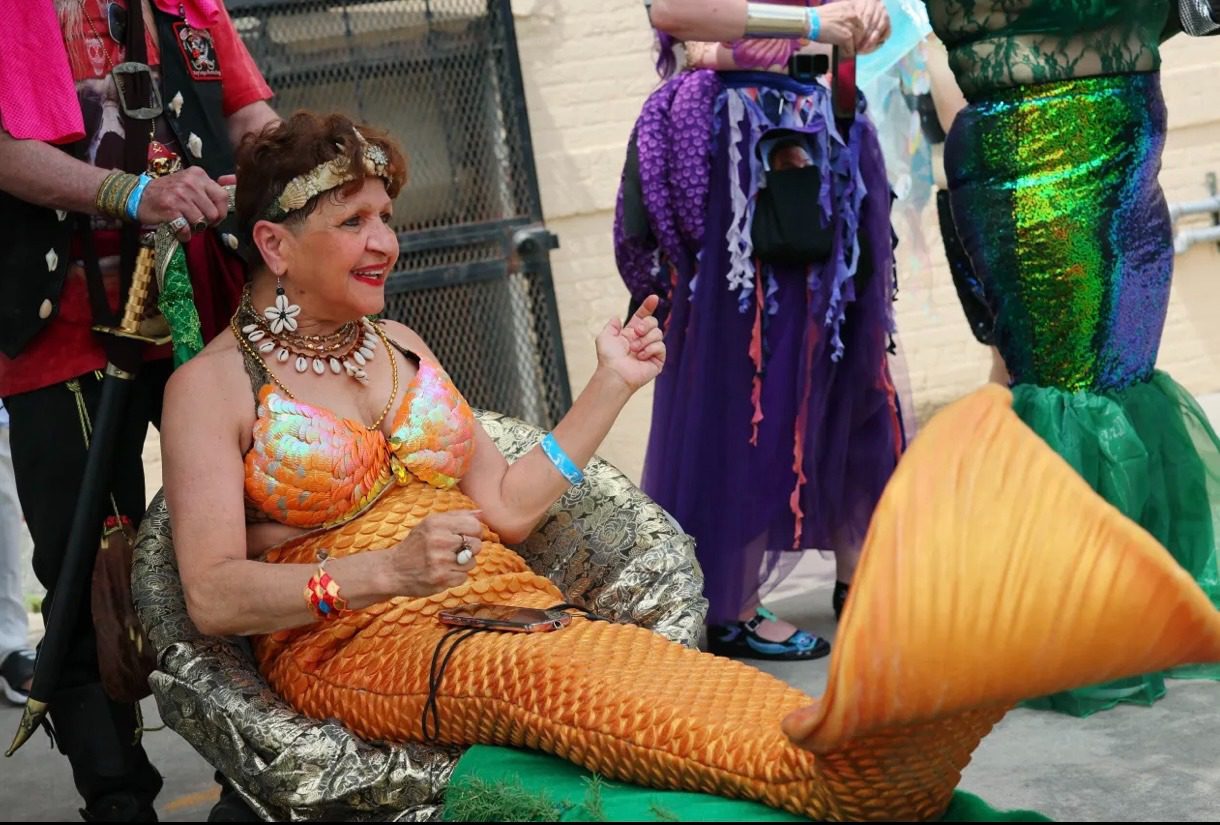
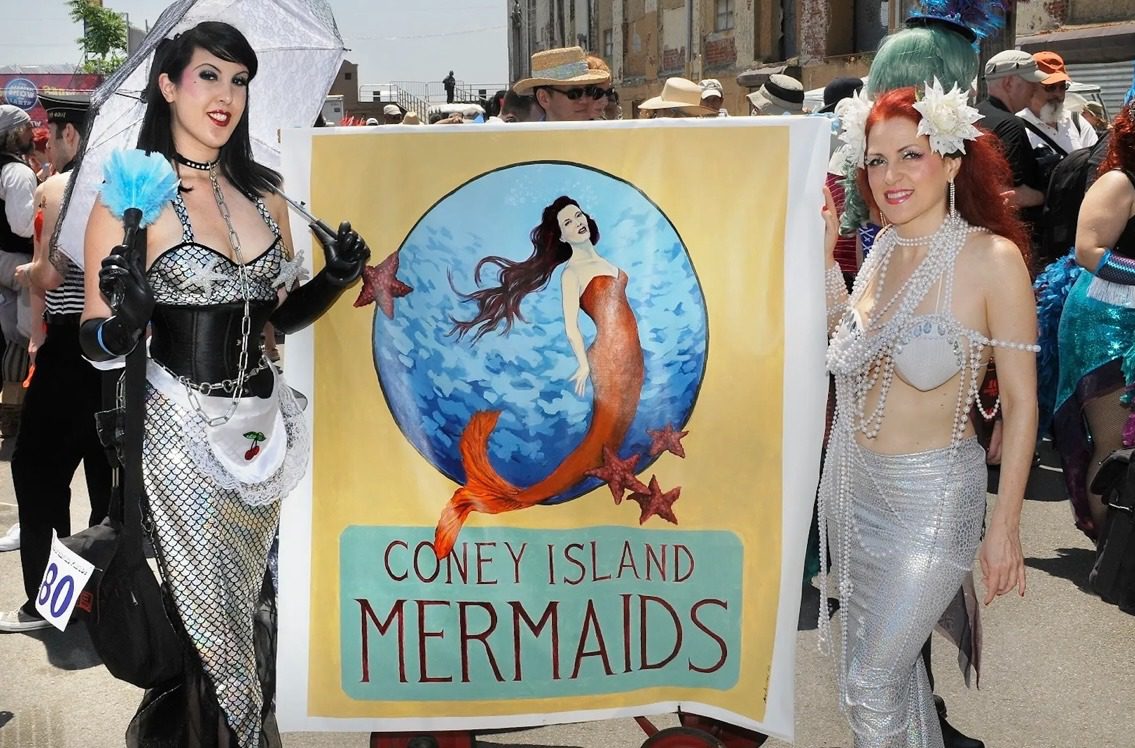
Thousands of participants transform into mermaids, mermen, sea kings, pirates, fairies, octopuses, coral reefs, and more. The parade features diverse dance troupes, orchestras, floats converted into ships, and even moving platforms decorated with shells and imitation scales. Every costume and prop is a handcrafted work of art; every participant is the hero of their own legend.
The parade kicks off at 1:00 PM, regardless of the weather, at the corner of West 21st Street and Surf Avenue. From there, the procession moves east, past crowds of spectators and the sound of drums, to West 10th Street, where the sea creatures leave the asphalt for the boardwalk. The parade then concludes beneath the famous Steeplechase Plaza Parachute Jump, dissolving into a joyous chaos of music, dancing, and cameras.
But that’s not the end. Around 4:00 PM, the second, more symbolic part begins—the Opening of the Ocean Ceremony. Parade founder Dick Zigun leads everyone to the beach, where King Neptune and the Mermaid Queen toss fruit into the waves—an ancient offering to the gods of summer. This moment officially opens the swimming season at Coney Island. Past honored Neptunes and Mermaids include icons of New York culture: Debbie Harry and Chris Stein, Amanda Palmer and Neil Gaiman, Lou Reed and Laurie Anderson.
Participants jokingly admit that bribing the judges is a long-standing tradition of the parade.
“We used to bring beer by the case, and it worked,” they recall. “Today, you have to come up with something special, like handmade gifts or costumed jokes.”
The Mermaid Parade is a blend of street theater, carnival, and performance, with absolutely no boundaries or censorship. Every year, over 3,000 people participate and about half a million spectators attend. It is the largest art parade in the U.S. and carries no political or commercial undertones.
After the procession, the Mermaid Ball takes place—a nautical-themed fantasy night party where mermaids and pirates reemerge from the foam to continue the celebration until dawn. Amidst the sound of the waves and drums, the Mermaid Parade reminds us: New York is a city where anyone can become a legend—all you need is scales, glitter, and a little magic.
What Visitors Need to Know
- Where is the best place to watch the parade? It all depends on your mood and preference. The boardwalk is a great place if you want to see the sparkling participants up close, as pedestrians and “push-floats” march there. Surf Avenue is the choice for those who want the full spectacle. Vintage cars, motorized floats, and entire art groups pass through there. But be prepared—the crowd is as dense as Times Square on New Year’s Eve. If you don’t plan to stay until the end, it’s better to stand on the north side of the street, closer to the subway.
- An ADA-accessible zone is available for guests with disabilities near the NYPD Command Center (between 10th and 12th Streets).
- Although the parade is known for its revealing costumes—mermaids have never been known for modesty—there are always many children present, and some families even celebrate birthdays here. Organizers stress that the parade is open to all, but the decision to bring young children rests with the parents.
- On the day of the parade, Coney Island is literally overwhelmed by people; many streets are closed to traffic from 10:00 AM to 6:00 PM. If you drive, park before 10 AM—after that, getting to the beach side of Surf Avenue will be difficult. The most convenient options are the parking lots at the New York Aquarium, Maimonides Park, or private lots near Surf Avenue. However, the best advice from the organizers is to use public transportation to avoid drowning in traffic.
- Want to do more than just watch? Coney Island USA offers various levels of participation and registration—from family costume groups to vintage cars and artistic performances. Full details are available on the official website. Online registration usually closes the day before, but you can register on the day of the parade (starting at 10:00 AM, cash only).
- For true fans, there’s even a Judge Membership, which includes access to a special viewing stand, great sightlines, and, as the organizers joke, “small bribes” in the form of bonuses and surprises.
The Heart and Soul of Coney Island
The Mermaid Parade is more than just a spectacular show. Every year, it brings an economic boost to Coney Island, attracting hundreds of thousands of guests and giving new life to local businesses. As Bambi the Mermaid, director of the “Burlesque at the Beach” program, says:
“The most important thing about the parade is to remind people that Coney Island exists. If the parade brings them out here, it helps protect the whole neighborhood.”
Bambi, whose real name is Andrea Cambridge, first came to Coney Island right after moving to New York in 1990. She was charmed by the bright rides, the roar of the crowd, and the unique atmosphere of freedom. Since then, she has participated in the Mermaid Parade every year. Even in 2020, when the parade was canceled due to the pandemic, she and a few enthusiasts went out onto the boardwalk in full costume, preserving the tradition.
Another long-time participant, Kate Dale, a props artist from the Juilliard School and a board member of Coney Island USA, describes the parade as a celebration of art. Her costumes, created from found materials, have won awards multiple times, and she has helped design the stage and technical equipment for the Sideshows by the Seashore theater.
“The Mermaid Parade is the best thing about New York,” she says. “People from all walks of life come together to celebrate summer and the ocean. Mermaids do what they want. Their spirit is the spirit of New York.”
Adam “Realman” Rinn, a vaudeville performer and artistic director of Coney Island USA, grew up nearby and remembers a time when there were more parade participants than spectators.
“Now it’s one of the biggest art parades in the country and the most fun day at Coney Island,” he says.
Participants dream that the event continues to grow but never loses its unique character. The parade has already become a cultural jewel of New York, and everyone who comes once always returns. It is a celebration of art, freedom, and a touch of madness, where the sparkle of skin and scales symbolizes not provocation, but the joy of life. And as soon as the wave of participants passes down Surf Avenue, it becomes clear: summer has officially begun at Coney Island.