

SummerStage is an annual summer music and arts festival held in Central Park. It features free concerts of various genres, theatrical plays, and dance shows. Over the years, this event has become an icon for New York City, filling its parks with an atmosphere of creativity and bringing people together. SummerStage is more than just a concert series—it’s a true celebration of the city, its vibrancy, and its diversity. Read more at newyorkski.
Historical Roots of Free Music Concerts
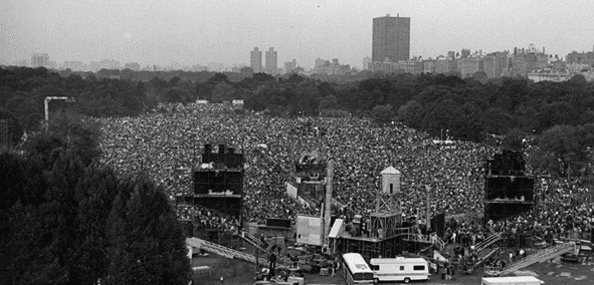
You might be surprised to learn that the historical roots of this free festival go all the way back to the 19th century. One of the most popular venues for these early events was the Battery, also known as Castle Garden or Castle Clinton. It hosted free concerts in New York from 1824 to 1855. Military bands regularly performed there, and in 1850, Jenny Lind, the famous “Swedish Nightingale,” graced the stage.
Since then, the Battery has consistently hosted concerts and for a long time remained a favorite spot for the summer concert season.
Central Park as a Venue
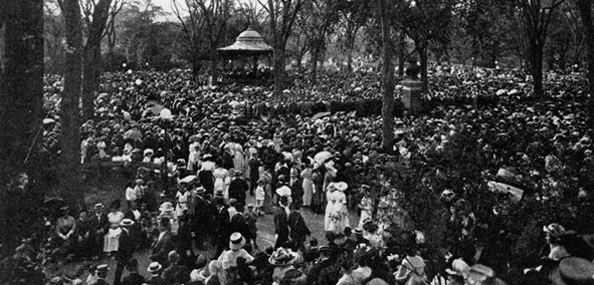
For many years, New York’s Central Park served not only as a place for relaxation and a green oasis in the heart of the city but also as a major cultural hub. After all, it was here in the 19th century that some of the first free summer music concerts were held.
One of the earliest free music concerts in Central Park took place in the distant year of 1859, in the Ramble. In the late 19th and early 20th centuries, the summer concerts were moved to the Mall. For instance, a complex cast-iron bandstand once stood on the north side of the Mall (at the current site of the bust of composer Ludwig van Beethoven).
Each year, thousands of visitors would flock to the event, not wanting to miss the unique opportunity to attend a free open-air music festival.
It’s also worth noting that Calvert Vaux designed special fences to protect the park’s landscape from the crowds.
There were some interesting rules regarding the summer concerts in Central Park. Until 1877, due to the prevailing social norms, events were prohibited on Saturdays and Sundays. The reason was that park commissioners wanted to allow workers, who worked six days a week, to also enjoy evening concerts and outdoor entertainment.
Expanding the Event
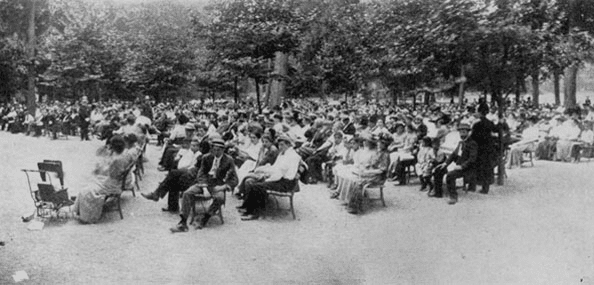
Eventually, the free music festival began to expand, welcoming more and more guests. In 1910, the New York City Department of Parks built a temporary bandstand on the north side of Central Park, at McGown’s Pass.
This expansion was a necessary step for the development of municipal music. For the city’s residents and tourists, these free festivals were not just a random event or a form of entertainment; they had become a place for cultural enrichment, promoting art and an appreciation for good music.
The free music festival, held every summer in Central Park, fostered musical development and helped visitors develop their musical tastes.
The concerts in Central Park continued into the early 20th century, even during World War I. In 1918, the famous Italian opera star Enrico Caruso came to New York for the summer music festival. He entertained a crowd on the Mall. The media at the time estimated that around 50,000 people attended his concert. And according to the newspaper “Over There,” the park drew its largest-ever crowd during this concert.
The Founding of “SummerStage”
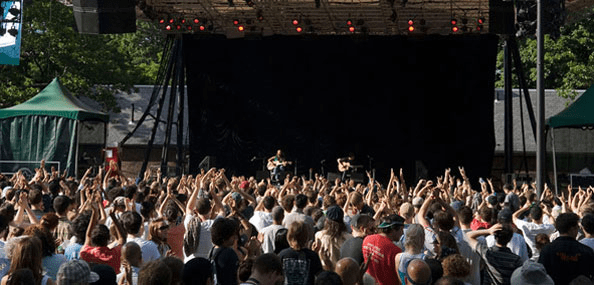
Throughout the 20th century, the free music festivals in New York’s Central Park were on-again, off-again. During this time, the event underwent many changes. The next major one happened in the 1980s.
The idea for SummerStage was born in 1986, thanks to the Central Park Conservancy. The organization wanted to restore the former glory of the free music festivals held during the summer months.
Some of the first concerts took place at the Naumburg Bandshell. Groups like the Sun Ra Arkestra and Ladysmith Black Mambazo performed in Central Park.
A distinctive feature of the festival was that it provided a platform for artists to express themselves, especially for representatives of various minorities with different cultural traditions. In the late 1980s and early 1990s, as hip-hop was gaining popularity, SummerStage provided a platform for various rap artists, giving them a proper venue and access to new audiences. This move not only helped to legitimize hip-hop as an art form but also solidified SummerStage’s role as a leader in cultural inclusivity.
From that moment on, the free festivals in Central Park once again became an integral part of New York’s cultural life. Over the years, SummerStage has expanded significantly, adding film screenings and other performances to its already packed schedule. In the 2020s, the event attracts thousands of spectators, offering them the chance to enjoy open-air music, theatrical performances, dance shows, and film screenings. These cultural initiatives create an atmosphere of true community.