

American writer Herman Melville’s most famous novel is “Moby Dick,” a book he penned drawing heavily on his own experiences. Yet, the work initially failed to captivate his contemporaries. Despite this, Melville continued his literary path, and it was only after his death that his genius was truly recognized. Today, he’s celebrated as one of the most brilliant and significant figures in American Romanticism. Discover more about his incredible journey on newyorkski.info.
Early Life
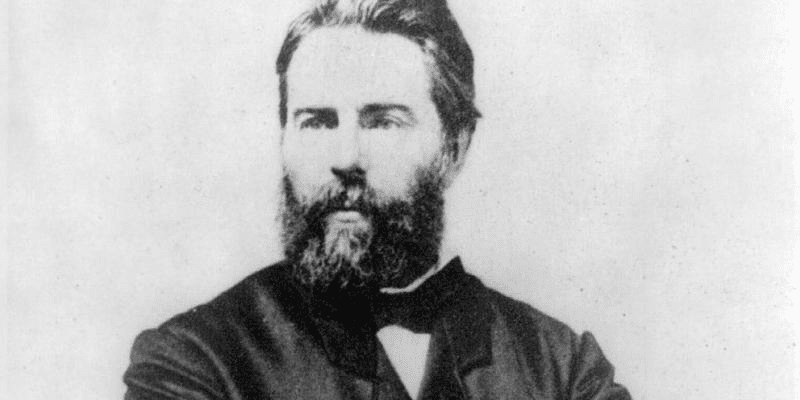
Herman Melville was born in New York City on August 1, 1819. His ancestors participated in the American Revolution in the 18th century. His father was a merchant, and his mother came from a wealthy family. The children were raised with strong religious traditions, which the future writer was proud of.
Herman’s childhood was one of abundance, spent in a large, comfortable family home. He attended a privileged school. However, when his father unexpectedly passed away in 1832, Herman, not wanting to burden his family, began an independent life. He first worked as a clerk in a bank. Then he supplemented his income as a schoolteacher and worked in a fur factory.
In 1837, the young man became a cabin boy and went to sea for the first time. In 1841, he signed on as a sailor aboard the whaling schooner “Acushnet” and set sail. Life on the ship was quite harsh, so the following year, during a stop at Nuku Hiva harbor in the Marquesas Islands, Herman, along with his friend Toby, deserted the “Acushnet.” They spent some time with the local Typee tribe before escaping the natives on the Sydney schooner “Lucy Ann.”
Herman then traveled until he settled in Haiti. There, he found work on the American warship “United States” and returned home in the fall of 1844.
Herman Melville’s Literary Works
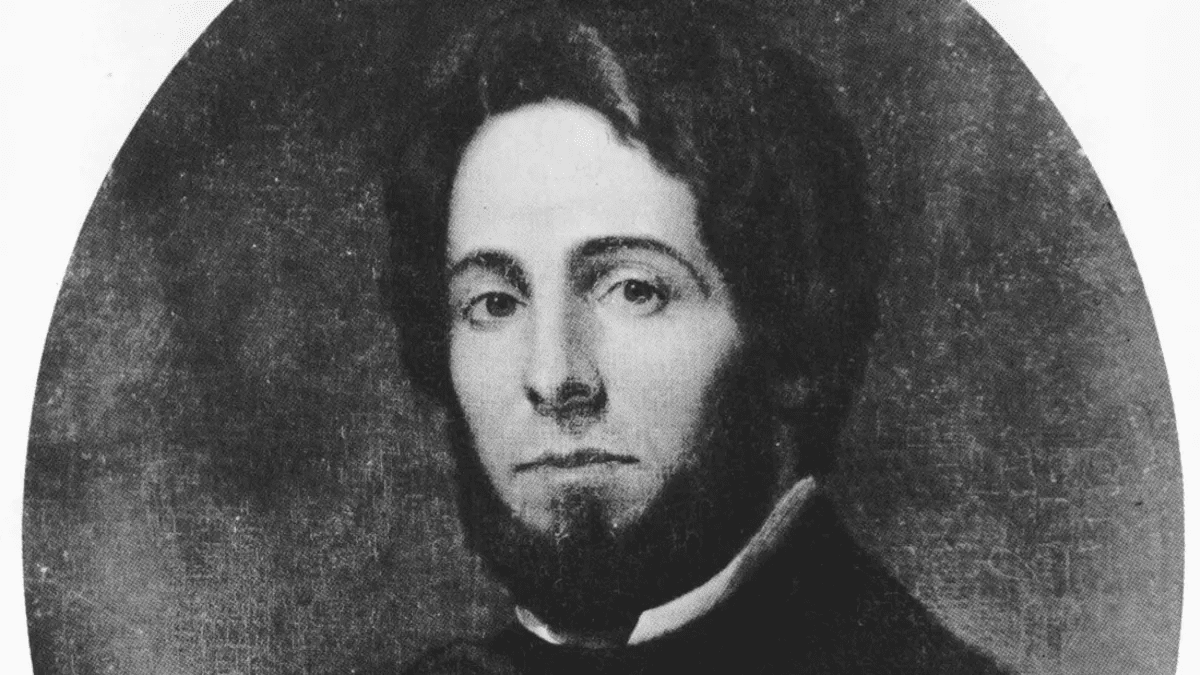
Upon returning to the U.S., the future writer settled in New York. He joined the local literary scene, frequently socializing with Washington Irving, Nathaniel Hawthorne, and Ralph Waldo Emerson. Melville also began to study philosophy and became acquainted with the works of German thinkers like Hegel, Kant, and the Schlegel brothers. The romantic poetry of William Blake and Percy Bysshe Shelley greatly influenced him.
During this period, Melville formed his own political views. He was an active supporter of democracy, detested slavery, and any form of oppression or disregard for people. He was also quite critical of the flaws in the U.S. government system.
The time spent at sea enriched Herman Melville with invaluable experience and impressions. These became the foundation of his literary work and defined his unique character as a maritime artist.
Herman Melville’s debut book was published in 1846. In it, the author used his own memories from his time in the Marquesas Islands, creating rich, fresh ethnographic material and romantically portraying the life of the Typee tribe against a backdrop of beautiful nature. Readers received the work quite warmly, so the writer penned a continuation.
The novel titled “Omoo” described his nomadic life in Haiti, as well as the extremely difficult working conditions in the merchant navy and the brutal treatment of sailors. While Melville had noticeably idealized the Typee people in his previous book, he showed the Haitians without embellishment.
The writer’s next work was the novel “White-Jacket” (1850). In it, he described the unattractive daily life on an American warship, marked by the constant humiliation of ordinary sailors.
“Moby Dick”: A Masterpiece Novel
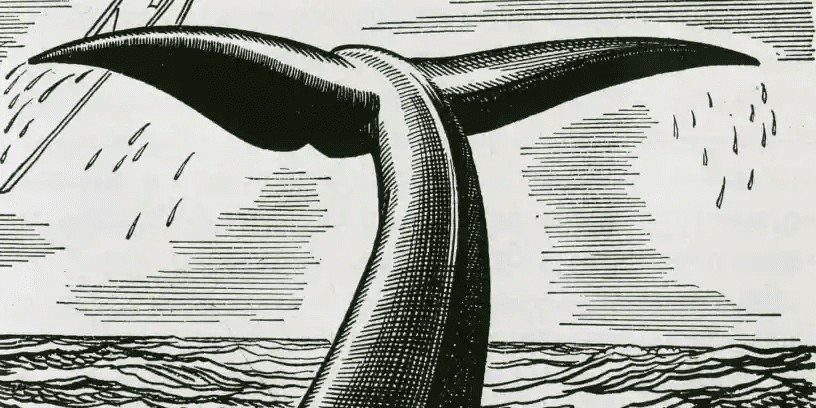
All these novels laid the groundwork for a true literary masterpiece – the novel “Moby Dick; or, The Whale,” which is now considered one of the greatest works of world literature. Initially, the author intended to create a book about whaling, but gradually the plot and structure of the work became more complex and took on a philosophical scope.
At the heart of “Moby Dick” are the adventures of the whaling ship “Pequod” as it hunts the mysterious, gigantic White Whale. The whale is portrayed not only as a powerful inhabitant of the ocean but also as the embodiment of ancient evil that sailors avoid to return home safely. The captain, driven by an obsession to defeat the whale at any cost, leads to the demise of the entire crew, save for one sailor.
“Moby Dick” boasts many layers of meaning and style. Over dozens of pages, the author vividly depicts the habits of whales, their anatomy, and the technology of the whaling industry. In this respect, the book can truly be called a genuine encyclopedia of knowledge about whales. The work also contains elements of a social novel.

Overall, the writer ventured beyond the usual confines of a novel, combining elements of daily life descriptions with allegories, symbolism, documentary aspects, and pathos. The realities of the whaling industry and shipboard life are intertwined with religious and philosophical themes. As a talented maritime artist, Melville masterfully conveyed in words the unforgettable beauty of sea landscapes, the changeable and rebellious element of the ocean, which becomes a kind of character in the novel. Additionally, the author incorporated many theatrical and dramatic components, as he was enthusiastically reading Shakespeare’s works while writing the book.
It’s worth noting that in Melville’s time, whaling was a common and important industry in the U.S., employing tens of thousands of people. Despite this, contemporaries failed to appreciate the philosophical depth of “Moby Dick,” often calling it strange.
Later Works and Death
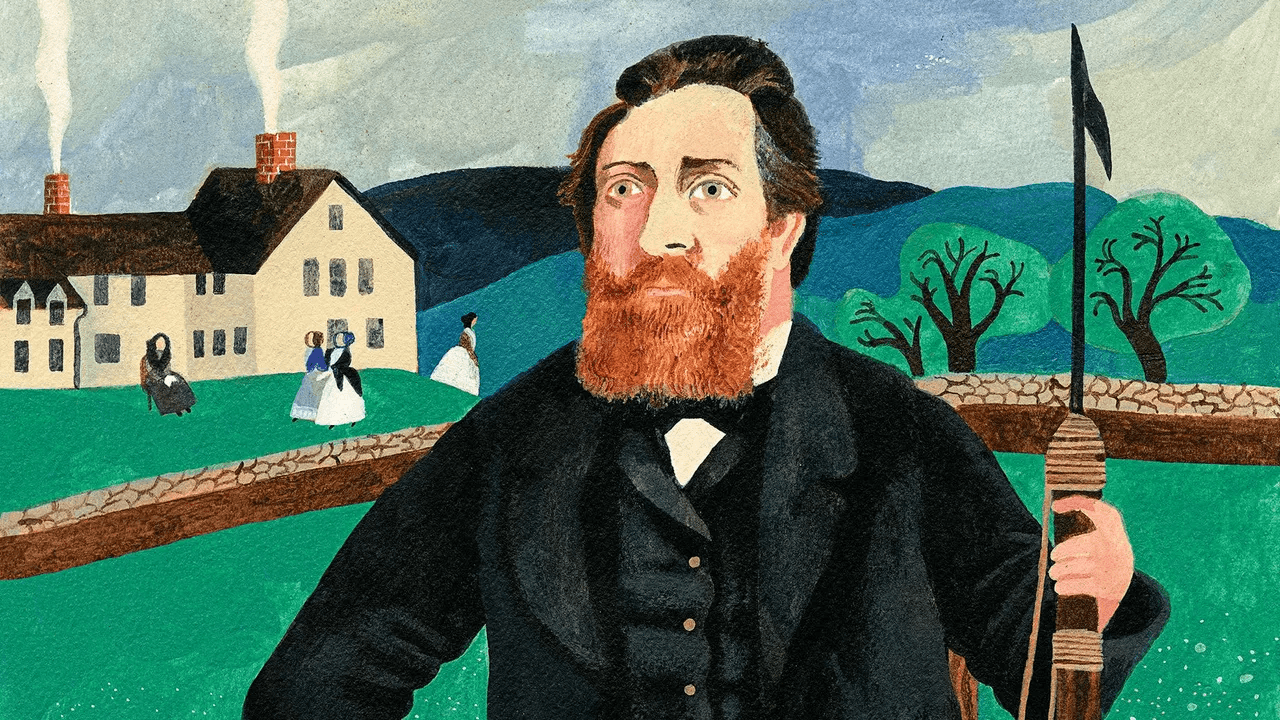
After the publication of “Moby Dick,” Herman Melville’s writing career continued for another four decades, but he gradually faded into obscurity. To earn a living, the writer worked as a customs official, yet he continued to write.
In 1852, the novel “Pierre” was published. The book was largely autobiographical, describing the complex psychological struggles in the life of the writer Pierre Glendinning, who sacrifices love for the sake of family duty. Three years later, the novel “Israel Potter” was released, in which Melville delved into historical themes, specifically the American Revolutionary War.
In addition to his longer prose works, the writer also penned a number of novellas, which are considered among the best examples of the genre in the U.S. Among them, “Benito Cereno” stands out, telling the story of an African American uprising aboard a ship. In the novella “Bartleby, the Scrivener,” Melville explores the difficult fate of a “little man.”
Herman Melville expressed the moral, philosophical, and religious thoughts of his later years in his poetry collections:
- “Battle-Pieces and Aspects of the War” (1866)
- “John Marr and Other Poems” (1888)
- “Timoleon” (1891)
In 1876, he published the novel in verse, “Clarel.” The last work the writer managed to finish was the novel “Billy Budd.” In it, he returned to maritime themes. The book was published posthumously after Herman Melville’s death.
The writer passed away from heart failure on September 28, 1891, in New York City. He was 72 years old. At the time, his work garnered little attention, and Melville had few admirers.
However, everything changed several decades later when the writer’s prose and poetry were rediscovered. Since then, he has been honored as one of the most significant American novelists. “Moby Dick” eventually found its readers and was recognized as a masterpiece of world literature. Other works also gained popularity, and Herman Melville was inducted into the pantheon of great literary masters of national culture.